Swiss market under stress
The Swiss milk market is in crisis, according to the country’s Farmers’ Association, which notes the price of milk has not been so low in 50 years. It is especially bad for the milk, which is processed into cream, butter and drinking milk. Currently the farmer gets 46 to 48 rappen (€0.41-43) for one kilogram of dairy milk, though the target price is 65 rappen (€0.59). The price erosion is caused by losses in exports due to the strong Swiss franc, shopping tourism, low world market prices and also current overproduction domestically.
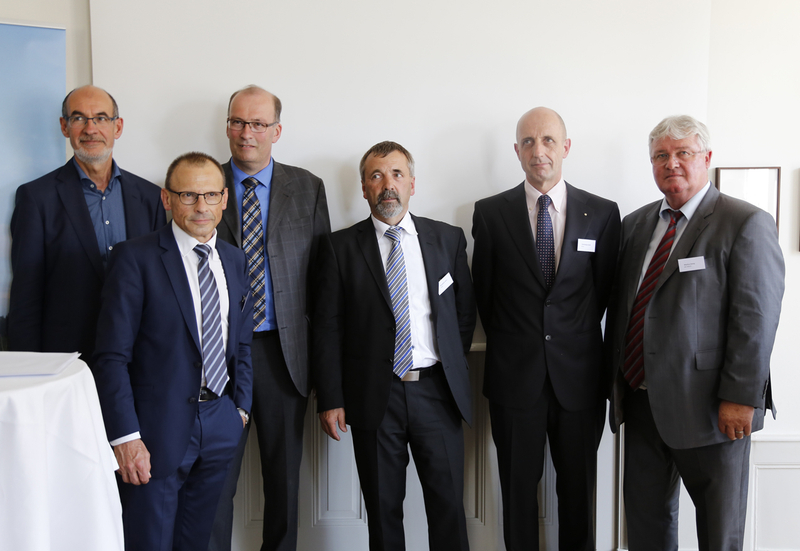
To discuss possible solutions the organisations Swiss Milk Producers (SMP), Swiss Farmers’ Union (SBV) and the dairy branch organization (BOM) had invited the key players, including Emmi, Cremo, Coop and Migros, to a milk summit in Bern at the end of May. Following the summit SMP, SBV and BOM presented a manifesto.
SMP-president Hans Peter Kern notes, “The dairy milk production in Switzerland is in danger. Many farmers are in a very desperate situation.” The BOM-president Markus Zemp adds, “We are now in a crisis that is life threatening for some farmers.” And the farmers’ president Markus Ritter warns, “We need to act immediately, otherwise the milk production in Switzerland is marginalized.”
As an immediate measure, the organisations are calling on the federally government to give more money to the RAUS (cows outside) programme, to simplify the programme “Grassland-based milk production” (GMF) and spend more money for promotion.
Dominique Kohli, vice director of the Federal Office for Agriculture, assured that the government is prepared to do more for promotion and to act quickly.
In the medium term BOM, SMP and SBV demand improved framework conditions in favour of milk production: the federal government must regulate the milk purchase contracts. It need clear guidelines in terms of quantity and price, says SBV director Jacques Bourgeois.
Currently, Swiss farmers often only learn afterwards in which segment their milk was marketed: A, B or C. Farmers need to know in advance, so that they can decide whether or not to provide C-milk. SBV finds that such a scheme would have a very damping effect.
“The situation will remain tense,” Ritter says. His advice to young farmers is currently not to invest in milk production, but to consider alternatives.
Johann Schneider-Ammann from the Federal Council has invited the dairy sector to further discussions. Then the dairy organisations demands will be discussed and Kern says he expects concrete answers from the federal government.