
Bulgarian dairy progressing, says USDA FAS
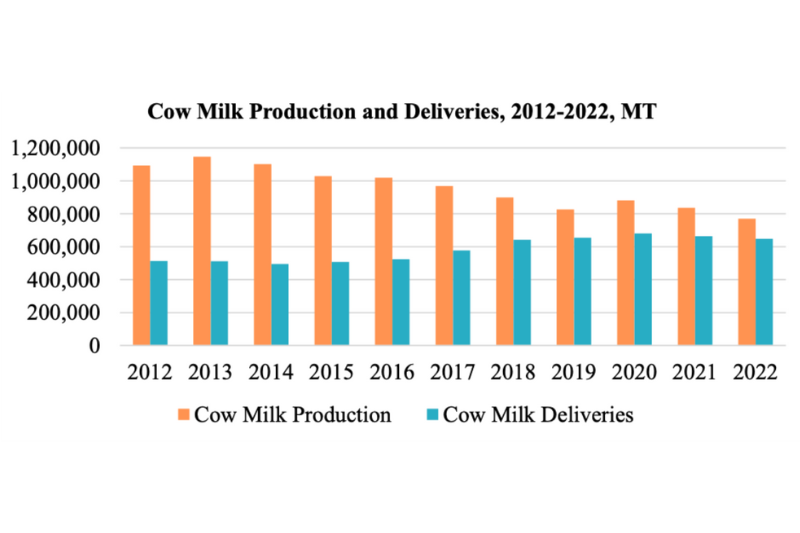
Image: Bulgarian Ministry of Agriculture Statistical Bulletins
In 2023, Bulgarian dairy farming stabilised with a growth in milk deliveries, according to a report by the US Department of Agriculture’s Foreign Agricultural Service (FAS). This was due to increased milk yields, despite continued decline in the dairy cow herd, and due to record high fluid milk imports. Consolidation and restructuring of the dairy has continued with an increasing and dominating role by larger, more efficient dairy operations.
In 2023, total milk deliveries increased by 4.2% from 2022 and were the highest since 2020, according to Eurostat. The country has 240 dairy processors, of which there are 10 larger companies. In 2023, United Milk Company and Tirbul merged and consolidation should be completed by July 2024. These two firms account for about 25% of the total market share.
Food inflation began to soften in the middle of 2023 and along with improving customer incomes, have supported demand. Current FAS/Sofia expectations are that the dairy industry should strengthen with a rebound in milk production in 2024 due to continued investments in farm efficiency, improved feed availability, reduced inflation and more dynamic demand by the retail and hospitality industries, according to Mila Boshakova-Petrova of the USDA FAS.
Other highlights are that Hungary, Romania and Poland are the leading suppliers of milk to Bulgaria, while there has been a modest growth in dairy products production, with yogurts increasing by 6% and cheese by 2% in 2023, the report notes. Fluid milk consumption is 11.7kg per capita, down slightly from 2022’s 12.1 kg per capita. White cheese sales increased by 17% by value but dipped by 7% in volume.
