SPONSORED: The Hidden Variables Affecting Performance in Cheese and Yoghurt Production
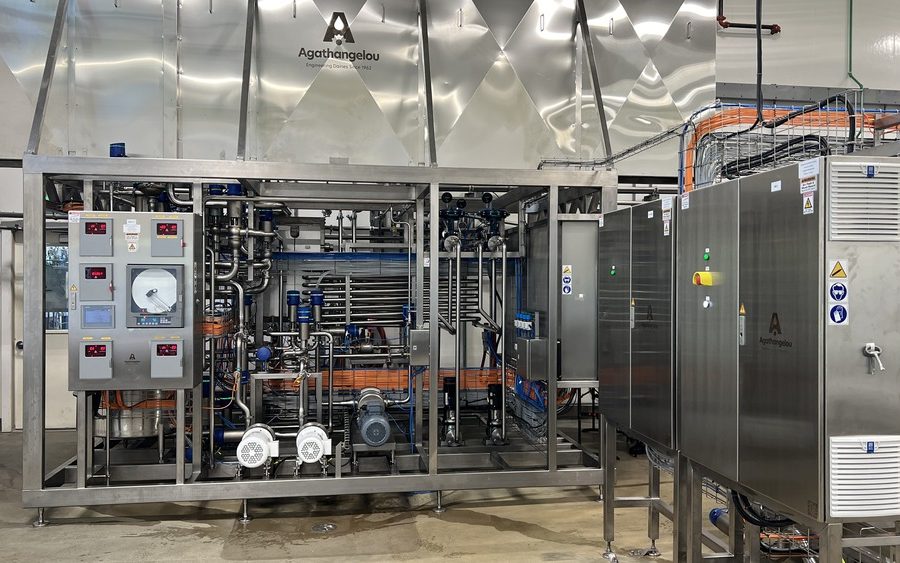
Credit: Agathangelou
Modern cheese and yoghurt facilities are operating under increasing pressure, particularly in maintaining consistent system performance. Expectations around consistency, efficiency, hygiene, and throughput continue to rise, while production environments themselves rarely remain static.
Product mixes evolve. Throughput increases. Production schedules change. Equipment is modified, expanded, or integrated with systems from different suppliers over time. Yet despite this growing operational complexity, many plants continue to assess performance challenges through the lens of visible production outcomes rather than the underlying process conditions influencing them.
In practice, many operational issues begin long before they become visible on the production floor. What appears to be inconsistent product behaviour, variability in performance, or recurring operational inefficiencies may often originate upstream in milk processing conditions or CIP performance. These systems are typically already in place. The challenge is rarely their existence, but whether they continue operating consistently under changing production realities.
One of the more difficult aspects of production optimisation is that inefficiencies rarely emerge dramatically. More often, they accumulate gradually and become absorbed into what is accepted as normal operation. Small thermal inconsistencies, unstable flow conditions, incremental fouling, extended cleaning cycles, or subtle process deviations may appear manageable individually. Yet over time, these factors can influence production reliability, operating costs, cleaning consistency, and ultimately product performance.
In cheese production, this may present through inconsistent curd behaviour, moisture variation, or gradual yield loss that is often initially attributed to recipe changes or operator handling. In yoghurt production, process inconsistencies may emerge differently, though the underlying challenge of upstream process stability remains equally relevant.
What makes these issues particularly difficult is that the visible symptom and the actual source are not always the same. For example, recurring production variability may ultimately originate from unnoticed temperature inconsistencies caused by fouling in a plate heat exchanger.
Similarly, recurring CIP inefficiencies may initially appear to be chemistry-related problems, while the underlying issue lies in hydraulic performance, valve behaviour, incomplete drainage, or flow conditions within parts of the system.
Many facilities also face an additional challenge: systems originally designed around nominal operating assumptions are increasingly expected to perform under changing conditions. Throughput expectations increase. Production requirements evolve. Systems that once operated comfortably may gradually begin functioning within increasingly narrow margins without this shift becoming immediately visible.
CIP performance is often one of the least visible yet most influential variables affecting production consistency and operational reliability. When factors such as circuit design, flow velocity, drainability, valve behaviour, or dead-leg management are not fully aligned with actual operating conditions, systems may continue functioning, but often with hidden inefficiencies that gradually affect cleaning performance, maintenance demands, operating costs, and production reliability.
Because production continues, these issues often remain unnoticed until operational pressure increases. And in today’s manufacturing environment, pressure inevitably increases through tighter margins, rising energy costs, labour constraints, efficiency expectations, and growing demands for consistency. One of the most underestimated operational advantages is not simply having systems installed, but maintaining a clear understanding of how process performance should behave over time and recognising when subtle deviations begin to emerge.
When milk processing and CIP systems are properly designed, documented, and understood during commissioning, performance deviations become visible signals rather than unexplained operational noise. Without that operational reference point, facilities often become reactive. Performance gradually shifts, but the reasons remain unclear. Small inefficiencies become embedded into everyday production rather than recognised as indicators of process drift.
Ultimately, performance in cheese and yoghurt production is rarely determined by a single machine or isolated process stage. Long-term consistency is shaped by how reliably the wider system performs together and by how early process deviations are recognised before they become operational problems.
- Written by Panagiotis Christoforou, Sales Manager, Agathangelou