BIPEA launches proficiency testing for cereulide detection in infant formula
Credit: BIPEA
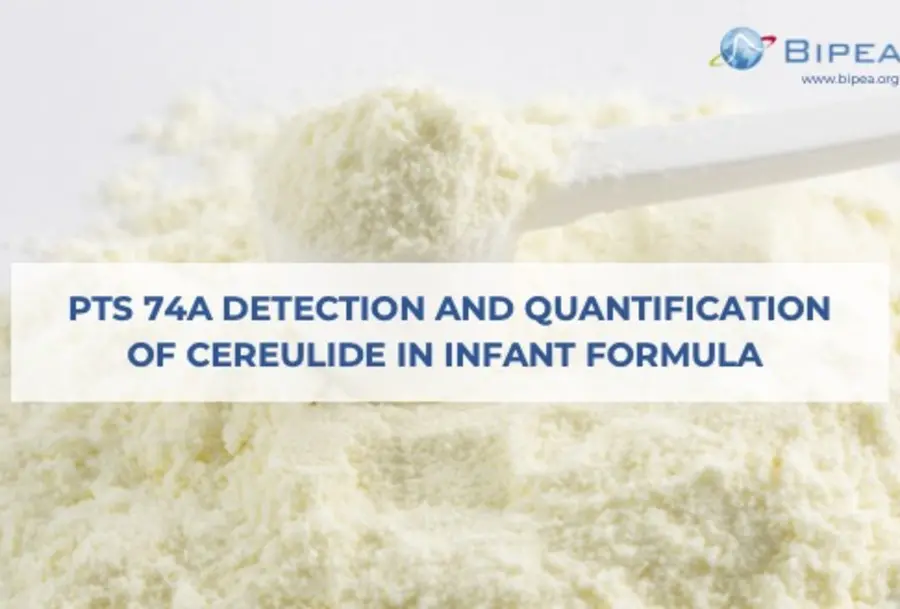
In response to the recent challenges regarding the control of infant nutrition products, BIPEA has launched its first proficiency testing round dedicated to the detection of cereulide in infant milk formula (74A). Despite its experimental nature, the round, held in April 2026, brought together 34 participating laboratories from more than 15 countries.
Designed as a qualitative and/or quantitative proficiency test, PT 74A focuses on cereulide toxin detection, with optional quantification. The samples produced for the experimental test involved the use of a positive commercial batch (infant formula naturally contaminated with cereulide) and a negative batch. Three sets of samples with varying contamination levels were then prepared, and a 10g sample from each set was sent to participating laboratories. Analyses were performed in accordance with ISO 18465:2017 and other comparable and appropriate methods.
In December and early January 2026, precautionary withdrawals and recalls of infant nutrition products manufactured by several global brands made headlines. In this context, BIPEA introduced 74A to allow laboratories to assess their analytical performance. From a qualitative perspective, three out of 34 laboratories (approximately 9%) did not achieve satisfactory results (an incorrect result for at least one of the three samples analysed) .
For quantitative analysis, an assigned value for the cereulide content in the samples was statistically established. Of the 34 participating laboratories, nine (approximately 26%) obtained unsatisfactory results, falling outside the tolerance range.
“Most results that fell outside the tolerance limits could be explained by the absence of a hydration step before toxin extraction from the milk powder. Future interlaboratory tests could introduce additional challenges, for example by diluting contaminated milk powder to bring the results closer to regulatory limits,” explained Abdelkader Boubtera, scientific and technical manager at BIPEA.
For over 50 years, BIPEA has supported laboratories worldwide through a wide range of proficiency tests, reference materials and quality control solutions across multiple sectors, including food, environment, cosmetics and pharmaceuticals. The introduction of PT 74A further demonstrates BIPEA’s commitment to addressing emerging analytical challenges and supporting food safety. Proficiency tests are a vital source of knowledge, and through their results, provide laboratories with valuable insight into their analytical performance. In critical areas , such as food safety, these insights play an essential role in strengthening the reliability of results.