SPONSORED: From detection to root cause

Credit: Biomerieux
Despite significant advances in microbiological testing, many dairy manufacturers continue to face recurring scraps due to contamination, sometimes leading to recalls. Too often, the response to a deviation or non-conformity on a production line relies on assumptions and predefined corrective protocols. These actions may be costly, invasive, and sometimes even destructive, with production resuming in the hope that the issue has been resolved, only for it to reappear later.
The financial impact can be substantial. The combined costs of product scrap, cleaning and sanitation, energy consumption, labour, reprocessing (where possible) and downgrading products to animal feed can quickly reach thousands of euros. In the most severe cases, when efforts focus solely on fixing the symptoms rather than understanding the root cause, losses can exceed one million euros. True operational excellence begins not with reacting faster, but with identifying and addressing the underlying source of the deviation.
In practice, organisations often struggle to translate analytical results into clear, actionable understanding. Investigations can become lengthy and inconclusive; corrective actions may fail to prevent recurrence, and operational inefficiencies accumulate over time.
Root cause analysis
The combination of robust microbiological data and structured Root Cause Analysis (RCA) methodologies can help bridge this gap. By improving both visibility and analytical rigour, dairy manufacturers can move from reactive responses to more sustainable and preventive approaches to quality management. bioMérieux, as a recognised expert in microbiology for food safety and quality, and CoThink, as an experimented RCA specialist, share their knowledge and fact-based experience.
1. A Recurring Challenge in Dairy Operations
Microbiological deviations in dairy production frequently trigger a cascade of operational consequences, including product holds, intensified cleaning procedures and extended investigations. These events often require significant time and resources, yet do not always lead to definitive conclusions.
A common observation across the industry is the recurrence of similar issues over time. Even after corrective actions have been implemented, comparable deviations may reappear under seemingly controlled conditions. This pattern suggests that the underlying causes are not fully identified or addressed. One deviation is tolerated but its repetition puts the finance health at risk, and the pressure becomes significant internally (need to absorb direct and undirect quality costs, restart the line as soon as possible, etc) and externally (increasing risk of backorders or damaged brand reputation).
In a yogurt plant, 1 contamination resulted in over €300,000 in direct (eg: finish products) and undirect (eg: energy, waste treatment) costs, which strongly affected the profits and losses for the year.
One contributing factor is reliance on incomplete or fragmented information. While microbiological data indicates that a deviation has occurred, it rarely explains the sequence of events that led to it. In the absence of a structured analytical framework, teams may rely on assumptions or prior experience, increasing the risk of misinterpretation and future recurrence.
As regulatory expectations rise and cost pressures intensify, there is growing recognition that deviation management must evolve toward deeper understanding and more systematic problem-solving.
2. The Complexity of Microbiological Systems
Dairy production environments are inherently complex. Microbial contamination can originate from multiple sources, including raw materials, processing equipment, environmental reservoirs, and human activities. These factors interact dynamically, creating conditions where deviations may arise from combinations of events rather than a single failure point.
Post-pasteurization environments represent a particularly sensitive area, where even minor lapses in hygiene or process control can result in contamination of finished products. At the same time, cleaning and disinfection processes, equipment design, and operational practices all influence microbial persistence and resistance.
Traditional microbiological testing provides essential information, but is often limited to discrete sampling points. While these data confirm the presence or absence of specific organisms, they may not capture broader patterns or trends across time and space.
This complexity makes it difficult to establish clear cause-and-effect relationships without a structured approach that integrates multiple sources of information.
A concrete example
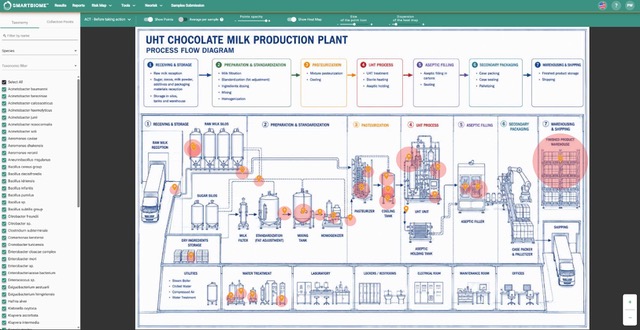
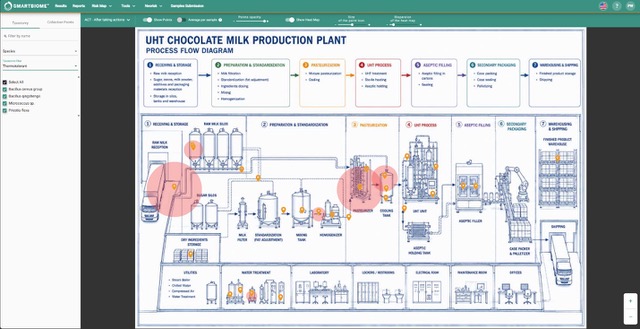
A UHT aseptic milk plant reached out to us after months of sporadic but impactful contamination. Due to a root cause analysis structure and genomic tools, it has been concluded that one issue was caused by two distinct sources: one from a raw material, and one from a biofilm in the process. The action plan was set accordingly, based on all the information related to the spoilers.
3. Enhancing Visibility Through Data
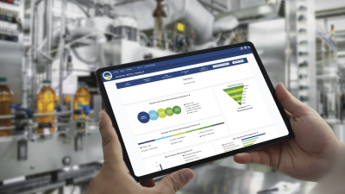
Advances in microbiological analysis now offer opportunities to improve the level of insight available to manufacturers. Beyond routine detection, more comprehensive approaches can provide a broader view of microbial populations and their evolution within production environments. The use and interpretation of whole genome sequencing and Metagenomics by bioMérieux strongly supports the root cause analysis.
Such data can reveal recurring contamination patterns, identify potential reservoirs, and highlight changes in microbial dynamics over time. This agnostic approach through DNA sequencing allows a deeper understanding of the full ecosystem thanks to microbiome analysis, rather than looking for specific microorganisms that might or might not grow, or focusing only on the “usual suspects” that are already known and monitored.
However, access to more data does not automatically resolve the challenge. Without a rigorous framework for interpretation, additional information can increase complexity rather than clarity. The key lies in combining data generation with analytical methodologies.
4. RCA as a critical capability, not just a tool
RCA skills provide a disciplined approach to understanding deviations by focusing on the mechanisms that enable them to occur. Rather than addressing immediate symptoms, RCA aims to identify the underlying deviations and conditions that must be corrected to prevent recurrence.
Effective RCA requires:
- A structured exploration of possible causes,
- methodologies to support the common language and asking the right questions,
- a clear distinction between facts (clear evidence) and assumptions,
- the visualisation of logical cause-and-effect relationships,
- collaboration across functions to incorporate diverse perspectives.
When applied systematically, RCA reduces the influence of cognitive bias and supports more objective decision-making. It enables organizations to move beyond intuitive reasoning and develop conclusions that are grounded in evidence. Importantly, RCA is not only a tool for investigation, but also a capability that strengthens overall process understanding and resilience for informed decision-making.
5. Bridging Data and Methodology
A common pitfall is to identify all possible causes and start checking every aspect, which creates a lot of additional workload and suspicion. The integration of microbiological data and structured RCA creates a more powerful approach to deviation management.
In practice, this involves:
- Detecting deviations through reliable analytical methods.
- Consolidating relevant data from multiple sources (testing, process parameters, environmental observations).
- Applying structured RCA to explore and refine potential causes.
- Applying structured RCA methods to define and fully understand the deviations.
- Using microbiological evidence to validate or eliminate hypotheses.
- Implementing corrective and preventive actions that directly address identified root causes.
This combination ensures that investigations are both data-driven and methodologically robust. It allows organisations to move from isolated observations to a coherent understanding of the entire facility ecosystem.
Before:
After:
6. Operational and Strategic Benefits
Adopting an integrated approach provides several key benefits for dairy manufacturers.
Operationally, it improves the efficiency and effectiveness of investigations, reducing the time and effort required to resolve deviations. By focusing on root causes, organizations can implement more targeted corrective preventive actions, minimize recurrence, and reduce associated costs.
From a quality perspective, this approach strengthens the robustness of production systems and enhances the reliability of outcomes. It also supports compliance with regulatory expectations by providing clear, structured documentation of investigations.
At a broader level, integrating data and methodology fosters a more proactive quality of culture. Teams gain greater confidence in their ability to understand complex situations, collaborate effectively, and drive continuous improvement.
Conclusion
The ability to detect microbiological deviations is no longer the main limitation in dairy quality management. The remaining challenge lies in understanding their origin and preventing their recurrence.
By combining enhanced microbiological visibility with structured RCA skills, organisations can address this challenge more effectively. This approach enables more accurate investigations, more sustainable corrective actions, and greater overall control of production systems.
Ultimately, the transition from detection to understanding represents a critical step toward more resilient and proactive quality management in the dairy industry.