Pembrokeshire Creamery starts clean

Credit: Pembrokeshire Creamery/Kersia
Opening a new processing plant poses several challenges, particularly while maintaining core company values. For a facility to meet the industry standards and fulfil ambitious operational growth, hygiene is not just a procedural requirement – it is integral to product safety, and the business’ reputation. Pembrokeshire Creamery Limited has recently navigated these obstacles while prioritising scalability and sustainability.
One year in
The dairy industry is under increasing pressure to meet rigorous food safety and hygiene standards, particularly with the growing demand for higher British Retail Consortium certifications (BRCGS) from retailers and manufacturers.
Achieving such accreditations not only enhances operational credibility but also ensures that milk and dairy products are safe for consumption.
Pembrokeshire Creamery is a recent example of how businesses in the dairy sector are addressing these demands.
Since opening in July 2024, the creamery has attained AA+ grade BRCGS certification, achieving a unique position as the only BRCGS-accredited liquid processing facility in Wales delivering to major retailers, as well as regional wholesale and independent business customers.
In 12 months, production has doubled to 150,000 litres of milk a day, meaning almost one million litres enters the supply chain every week. This impressive growth was recognised in the Wales Food and Drink Awards 2025, with Pembrokeshire Creamery being awarded Scale-up Company of the Year.
Dan Jones, national account manager at Pembrokeshire Creamery, explains the motivation for establishing the business. “We had identified fragmentation in the Welsh dairy supply chain and saw an opportunity to fill the gap in the market by keeping the entire economic footprint, from farm to customer, in Wales.
“Our goal is to strengthen the Welsh milk supply chain, ensuring that we provide high-quality milk, produced locally, to Welsh consumers,” he explains.
Core company values
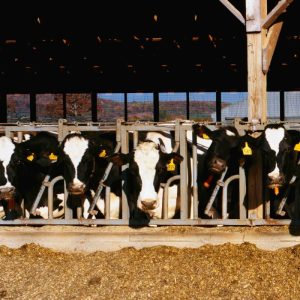
Beyond operational objectives, Pembrokeshire Creamery is underpinned by a core set of values. To support commitments to sustainability, the local community and the Welsh economy, the creamery sources its milk from dairy farmers, all located within 30 miles of the site, helping reduce food miles.
Milk supply and farm services manager, Chris Reynolds, explains how these values shape the business strategy right at the start of the supply chain, on the farm. “We select dairy farmers whose values align with ours – in particular, our focus on grazing and sustainability” he says.
“The farms we work with are all in grass-based systems. Grazing cows have a huge potential to capture carbon from the atmosphere in soils, so this supports our sustainability values as well as adhering to our high welfare standards.
“They also undertake annual on-farm carbon foot printing audits and action planning to reduce emissions, maximise resource efficiency and enhance the farmed environment – fulfilling the expectations of what the farm, and the creamery want to achieve.”
Opening the state-of-the-art facility created 60 new jobs, with 95 per cent of roles filled by local people, further embedding the contribution to the Welsh community.
“We see the opening of Pembrokeshire Creamery as a new chapter for the Welsh dairy sector,” says Jones.
Food safety first
As well as sustainability efforts, suppliers of milk to Pembrokeshire Creamery must meet the criteria of at least four per cent butterfat content, and 3.3 per cent protein.
Bactoscan results must have values of no more than 30,000 per millilitre to keep bacteria levels within industry guidelines.
Similarly, thermoduric levels must not exceed 500 per millilitre, and somatic cell counts (SCCs) must be no more than 200,000 per millilitre to maintain milk quality throughout the process.
Rigorous hygiene protocols are crucial to hitting and maintaining these targets but are also supported by farmer-processor relations.
“Having strong, transparent relationships ensures our suppliers are consistently hitting the food safety criteria required to deliver the highest quality milk, as food safety starts on the farm,” says Reynolds.
Dairy processing facilities with advanced hygiene protocols reduce the risk of E. coli, Salmonella, and Listeria contamination significantly, with such measures essential not only for industry compliance but also maintaining consumer trust in dairy products.
Jones underscores the critical role of adhering to stringent food safety protocols. “For us, it all starts with food safety, and quality of product – it is central to everything we do,” he emphasises. “Our AA+ BRCGS-grade rating ensures that we follow the highest standards in the industry so that we can work with the major retailers throughout Wales and achieve those high standards that consumers really want.”
BRCGS certification provides a clear framework for ensuring safety, with strict guidelines around microbiological control.
To establish its hygiene infrastructure, Pembrokeshire Creamery issued a formal tender to select a partner based on several criteria including, technical food safety expertise, chemical performance, auditing support, engineer response times and training provision.
Aaron Morgan, site technical manager, notes as to why Kersia UK was appointed. “Kersia stood out immediately for their hands-on approach and depth of experience,” he states. “They demonstrated not just knowledge of the chemistry, but also of how it applies practically in a fast-paced food facility. We were particularly impressed by their consistent engagement, and crucially, the tailored support offered to support us in hitting BRCGS standards.”
Regional sales manager at Kersia UK, Andrew Blackler, explains how Kersia has since supported the processor. “From the outset our approach to the partnership has been collaborative, from developing protocols to fine-tuning a mixed range of products that meets their needs,” he says.
“This included the development of Clean-in-Place (CIP) validation methods, the establishment of robust open plant cleaning (OPC) routines, and a detailed programme for microbiological swabbing and verification.”
Programmes were also developed to optimise on water and energy use – supporting the creamery’s commitment to sustainability.
Hygiene products provided include Deptal BC Max, a low-foaming alkaline for targeted cleaning in critical areas; acid-based descalers and caustic detergents for protecting CIP systems from microbial contamination, and foaming agents for external equipment and filler hygiene.
Hand sanitisers located throughout the premises and cleaning products provided for the canteen and washrooms maintain employee-focused hygiene, and training is delivered to support staff in applying hygiene solutions effectively.
“Kersia has delivered structured, practical training to the operations and engineering teams, addressing chemical handling and hygiene awareness, which have massively supported us in being audit ready,” explains Morgan.
To further support the creamery, Kersia visits the site on a regular basis to conduct hygiene audits and propose recommendations.
“Hygiene is a massive priority, but beyond that, the products and application must be consistently good quality so that we can maintain standards with each and every clean, so regular visits ensure that we stay on top of our hygiene protocols,” Morgan adds.
To continuously improve their cleaning performance, Pembrokeshire Creamery conducts several routine procedures including weekly verification swabs, daily ATP checks across higher-risk areas, chemical strength checks and CIP return water titration and conductivity verification.
This allows site managers to identify issues quickly, in tandem with Kerisa’s proactive support. “Routine checks and direct access to Kersia’s technical support mean we can improve any protocols quickly, with minimal disruption to production,” explains Morgan.
Looking ahead
As retail and consumer demand for local dairy products continues to grow, Pembrokeshire Creamery is working to strengthen its contribution to 120 million litres of milk, to the 15 billion litres per year currently produced by the UK dairy sector.
This increased capacity will enhance the company’s commitments to improved sustainability by expanding its fully integrated, Welsh supply chain from farm to shelf.
Strict hygiene protocols will remain critical to maintaining the BRCGS standards achieved in smaller outputs, and to adhering to increased regulations associated with wider distribution.
Pembrokeshire Creamery’s strong working relationship with Kersia has facilitated early success and supported the creamery’s expansion.
“We are working closely establish optimised cleaning programmes that support the scaling up of production and the continued delivery of safe, top-quality milk,” explains Morgan. “Kersia have not just supplied products – they have actively helped shape how we clean, monitor, and think about hygiene.”
Topics
farming Wales Food and Drink Awards 2025
PeopleAaron Morgan Andrew Blackler Chris Reynolds Dan Jones
OrganisationsKersia Pembrokeshire Creamery Ltd.
Regions