Protecting the product is key

Credit: World Packaging Organisation
The new European Union (EU) packaging and packaging waste regulation (PPWR), entering into force on 12 August 2026(1), brings new challenges to dairy companies and producers. That includes having to minimise packaging, use more recycled material and give clear sorting instructions on milk cartons.
However, the dairy industry is clear that the primary aim of milk packaging needs to be fulfilled, which is to protect the product. This is particularly important for chilled and sensitive dairy items. “The dairy sector supports the environmental objectives of the regulation, but milk packaging must continue to guarantee food safety, product quality and shelf life,” Alexander Roth, communication officer at EU industry body the European Dairy Association (EDA), told Dairy Industries International (DII).
The regulation sets EU-wide recycled content targets notably of 30% PET by 2030 increasing to 50% in 2040 (65% for single-use PET bottles), with these goals calculated as averages per manufacturing plant per year. However, Roth stresses the “availability of food-grade recycled plastic is currently limited,” making it a challenge for industry to meet these goals in the short term, he says. “So while the PPWR may lead to more recyclable packaging designs and reduce unnecessary plastic components, these changes must remain technically feasible and compatible with strict food safety requirements.”
The industry is looking ahead. It is working on mono-material plastic packaging that is easier to recycle, packaging with higher recycled content, bio-based plastics made from renewable materials and lighter packaging designs that reduce material use and carbon emissions, states Roth. “Some innovations also improve recycling processes, such as detectable pigments in plastic bottles that help sorting systems identify material more easily.”
Iva Werbynská, managing director of the Prague-based Czech Packaging Institute (Obalový institut Syba) and general secretary of Epic (European Packaging Institutes Consortium), told DII that the new minimum recycled content targets will be particularly challenging for the industry given the strict hygiene and food safety standards for dairy products in particular. “The question is not just if recycled material exists, but whether there is enough high-quality, food-grade recycled content at a viable cost,” she says.
She notes new EU labelling requirements will mean dairy brands will need to rethink not only the technical structure of packaging, but also how they use the available surface for communication, branding and mandatory information.
Meanwhile, with the continued drive against overpackaging, it will become much harder to justify secondary layers, oversized decorative structures or packaging elements that do not improve product protection, handling or shelf life. This means that luxury or premium dairy packaging must be expressed through “smarter design, efficient structure, strong graphics, usability and material responsibility, not more material,” Werbynská says.
As it stands, industry continues to innovate to reduce packaging while not diminishing product protection. Werbynská notes the Northeim, Germany headquartered Thimm winning a WorldStar Packaging Award in 2024 for its packaging solution(2) for ‘Romadur’ cheese produced by Madeta, a major Czech Republic milk processor.
Made from heat-resistant corrugated cardboard, it is “designed so cheese can be baked directly in the pack in microwave or conventional ovens and then eaten from it by the consumer, making it especially suitable for food service, festivals and other on-the-go occasions,” Werbynská points out.
Dairy giant Danone’s circularity packaging director Frédéric Chivrac told DII that while the company’s innovation strategy was global, solutions were “always adapted to fit habits, infrastructure and expectations.” In this way, although cups were the backbone of yogurt packaging, “there is not one single format, far from it,” he says.
“Single cups are great when you’re talking about high protein or performance products, while multi-serve formats really fit breakfast and family usage. At the same time, we’re seeing strong momentum behind drinkable dairy: shots, bottles, and functional beverages,” Chivrac adds. Indeed, he argued that the move towards multi-serve formats and rise in the high protein and functional drinks market is “reshaping the landscape” for dairy packaging. The increased demand for high protein and sports drinks is “leading to more bottle formats (PET or HDPE) as they meet both performance and shelf-life requirements,” he told DII.
In general, Chivrac says that 2026 has been “very active in terms of innovation”. In the US, Danone North America redesigned some of the beverage formats moving to recyclable PET bottles, including for its liquid non-dairy creamer brand International Delight. In June 2025 in Canada, Danone launched PET yogurt cups for its high-protein Greek yogurt drinks and snacks brand Oikos that integrate recycled PET, made at its Boucherville, Québec, plant.
Across Europe, Danone has also simplified its Actimel protein drink bottles by removing the label entirely. “Going label-less makes recycling much easier and helps reduce the number of packaging components by almost half,” he notes. “This is directly in line with our ‘Design for Recycling’ ambition,” which sets the goal of 95% or more of Danone packaging being recyclable by 2030.
Through its ‘Impact Journey’ policy(3) the brand is also committed to significantly reducing virgin plastic, aiming for a 17% cut by 2030 compared to 2019 levels, and “a long term goal to recover as much plastic as we use” with 95% or more plastic recovery by 2040, a shift he notes is in line with the PPWR circularity principles.
At the Netherlands-headquartered global dairy nutrition company FrieslandCampina, packaging innovations in recent years have been primarily focused on sustainability, Caroline Zwart-Clarijs, global R&D director for packaging development, told DII: “For example, we introduced a fully-recyclable cheese packaging(4), which also contains recycled content. We optimise our packaging as much as possible, taking into account consumer preferences and protecting the product to give it optimum shelf life, preventing food waste.”
She said FrieslandCampina is working to achieve a circular and net climate neutral packaging portfolio, deciding what the most suitable product is for each product, market and consumption occasion, considering different price levels.
Meanwhile, the most popular packaging differs across European countries she makes clear. “In the Netherlands, consumers are used to buying plain yogurt in beverage cartons, while in other European countries, yogurt is predominantly sold in cups.”
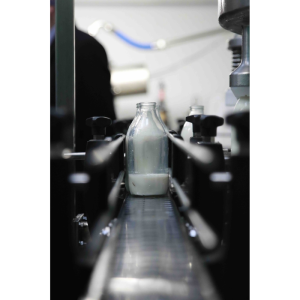
As the EDA notes in its September 2020 packaging factsheet(5), until the 1930s, the only packaging for milk was glass bottles. However, today glass is only used in some cases, with the predominant packaging for milk being beverage cartons and HDPE plastic bottles.
“For flavoured milk often consumed on the go, smaller PET bottles are popular,” Zwart-Clarijs notes. “For bigger portion sizes, here also, the same formats as for plain milk are used.”
In short, “there is not one single best packaging format, this depends on the consumer needs, recyclability and carbon footprint,” she says. “Achieving the right balance results in finding the optimal packaging choice.”
As a spokesperson for the Milan-based Ethical Packaging Charter Foundation (Fondazione Carta Etica del Packaging) told DII, the main dairy trend, “is a shift towards packaging solutions combining material reduction, recyclability and regulatory compliance, while ensuring that product quality, safety and distribution requirements are fully maintained.”
Notes:
- eur-lex.europa.eu/legal-content/EN/TXT/?uri=celex:52022PC0677
- www.thimm.com/en/sectors/dairy-chilled-products/;worldstar.org/winners_detail/6115/2024/+/+/Czech+Republic+and+Slovakia/
- www.danone.com/sustainability/our-approach/danone-impact-journey.html
- www.frieslandcampina.com/stories/towards-a-100-percent-circular-cheese-packaging/
- eda.euromilk.org/wp-content/uploads/2024/05/EDA_Factsheet_-_How_the_dairy_industry_chooses_its_packaging_options_-_Sept_2020.pdf
Topics
EU innovation packaging Packaging and Packaging Waste Regulation (PPWR)
PeopleAlexander Roth Caroline Zwart-Clarijs Frederic Chirac Iva Werbynska
OrganisationsCzech Packaging Institute danone Ethical Packaging Charter Foundation European Dairy Association (EDA) FrieslandCampina World Packaging Organisation
Regions