

First Milk and Agricarbon show evidence of soil carbon gains
Credit: First Milk
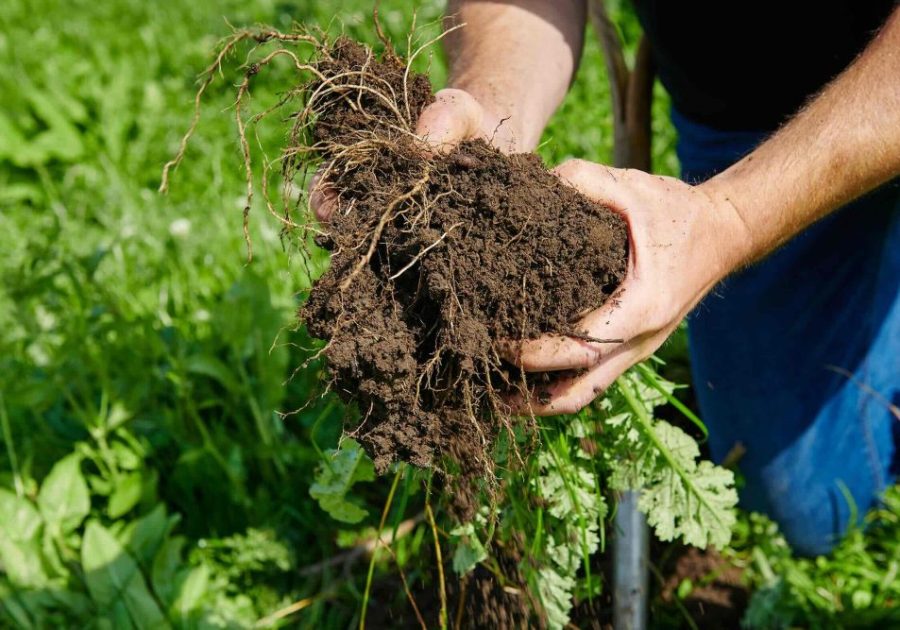
Early results from one of the largest soil carbon measurement programmes in UK dairy show measurable increases in soil carbon stocks on farms adopting regenerative practices. British farmer-owned dairy co-operative First Milk, working with soil carbon measurement specialist Agricarbon, has undertaken interim re-sampling on three member farms nearly four years after establishing a large-scale soil carbon baseline.
The early findings show soil carbon stocks increased on all three farms, with average gains of 8.9tC/ha (8.2T CO2e/ha/year) and a positive relationship observed between the level of regenerative farming activity and the degree of carbon increase observed. While the results apply only to the farms re-sampled so far and cannot be extrapolated more widely, they provide encouraging early evidence that regenerative farming practices are delivering measurable improvements.
Mark Brooking, chief impact officer at First Milk, said, “There has been a lot of debate about whether soil carbon can be measured reliably and whether sequestration can be demonstrated at farm level. What these results show is that when you measure properly, and when farmers adopt regenerative practices, we can see real changes happening in the soil. This is early data, but it is extremely encouraging and reinforces the direction our farmers are taking.
“By investing in direct measurement and building a high-quality dataset, we are ensuring that the environmental performance of our farms is backed by robust evidence. Over the coming months we will be building on this work as more data becomes available from our wider programme. Our goal is to build one of the strongest evidence bases for regenerative dairy farming outcomes anywhere in the world.”
Between 2021 and 2022, First Milk partnered with Agricarbon to establish a high-integrity soil carbon baseline across 109 farms, sampling soils to one metre depth using laboratory-based DUMAS analysis. The programme analysed around 118,000 soil samples, creating one of the most comprehensive datasets on soil carbon in dairy farming globally, the firms say.
Three farms approaching their four-year anniversary were selected for early re-measurement to assess whether detectable changes in carbon stocks could be observed. Across all three farms measured soil carbon stocks increased, although the magnitude of change varied between farms. The farms with the highest improvement in regenerative scores also showed the biggest increase in carbon stocks.
The farms were selected as an early test of remeasurement rather than a statistically representative sample of the wider First Milk membership. The findings therefore provide clear insight into trends at these individual farms, while the upcoming remeasurement programme will assess the extent to which similar trends are observed across the co-operative’s wider network of more than 700 farms.
Alan Strong, CFO and co-founder of Agricarbon, noted, “Direct measurement is the most robust way to understand what is happening in soils. These early re-measurement results show that, where farming practices are changing, measurable increases in soil carbon can occur over relatively short periods of time.”
The work comes at a time when new global guidance on land-based carbon accounting is emerging. The recently published Land Sector and Removals Standard (LSRS) under the Greenhouse Gas Protocol places clear emphasis on direct measurement, robust datasets and transparent reporting of soil carbon.
Because of its baseline programme, First Milk holds one of the largest contemporary soil carbon datasets in the dairy farming world, building robust evidence for regenerative dairy farming.
A full five-year remeasurement programme beginning later this year will expand sampling across the First Milk membership, growing the dataset and enhancing understanding of how farming practices influence soil carbon in dairy systems. While the interim remeasurement dataset is too small to draw conclusions on which practices are driving the greatest impact, the expanded programme commencing later in 2026 will provide the scale needed to answer these questions with confidence.
The results will help provide practical guidance for First Milk farmers on managing soils to protect and increase soil carbon, while supporting future carbon reporting frameworks across the dairy sector, according to First Milk.


