Conductivity sensor for CIP systems
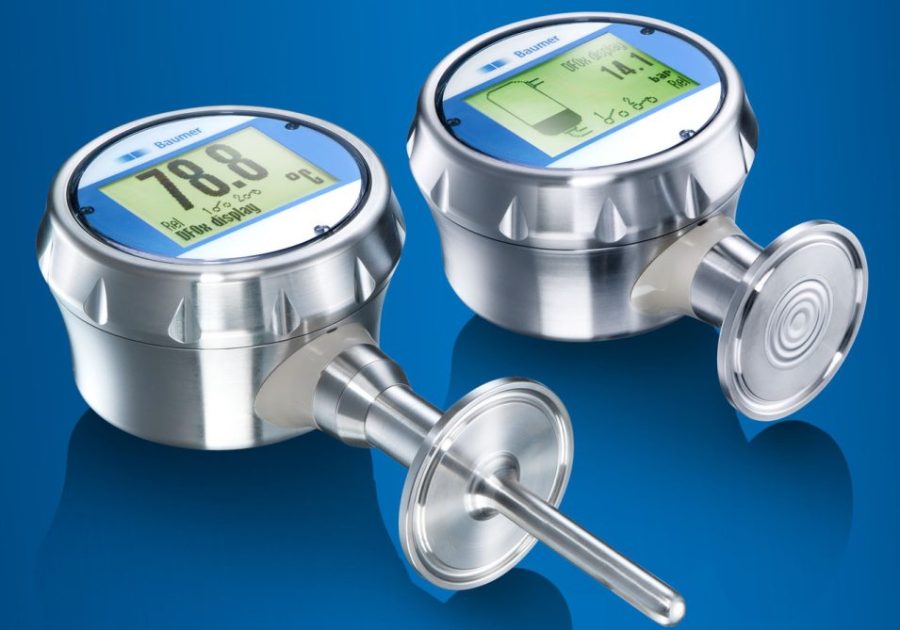
Credit: Baumer
The manufacture of dairy products is a major contributor to the Swiss economy, producing products which are very popular within the country and abroad. Züger Frischkäse is one of the country’s largest dairy manufacturers, employing around 300 people at its main plant, turning approximately 2.8 million litres of milk into more than 150 different types of cream cheese products, such as cottage cheese, mozzarella and mascarpone.
The challenges of achieving on-going sustainability, improving processing systems while meeting strict legal requirements, were key factors for Züger. A particular focus was how could it could optimise the CIP (Cleaning-In-Place) processes, and this has resulted in considerable savings in water and cleaning media, due to, in part, to equipment supplier Baumer and its range range of sensors, encoders and measuring instruments. These include the CombiLyz conductivity sensor, a sensor which is designed to provide precision, combined with speed. Züger uses the CombiLyz sensor for the phase separation of food materials, water and cleaning agents, during the critical stage of CIP. Due to the short reaction time of the temperature compensation, the CIP control system receives an exact measured value from the sensor in 15 seconds.
This ensures that the control system can react quickly to the individual phases by actuating values quickly and precisely. For example, in worst cases the CIP tank can become flooded and the system can go down.
Urs Koster, divisional manager for technical maintenance at Züger comments, “While our priority was to avoid the consequences of a faulty or delayed measuring signal, we also wanted to optimise efficiency.” He confirmed, “The success of the optimisation of our CIP procedures is significant, now we consume up to 30% less in cleaning agents, up to 50% less disinfectant and up to 100,000 litres less water per day.”
The design of the CombiLyz features a sensor-tip made of PEEK plastic as part of a one-piece hygienic design and a factor is its ability to provide fast temperature compensation, as well as housing the inductive sensor elements for measuring the electric conductivity and the temperature sensor. The sensor tip has a low thermal mass and low thermal transition resistance, enabling the sensor to react very quickly, even at significant temperature fluctuations.