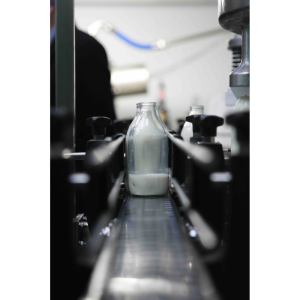
Sustainable pathway for dairy released in UK

Credit: The Dairy Roadmap
Following a summer that has tested dairy farms with extreme heat, weather pressures and the ongoing challenge of Bluetongue, The Dairy Roadmap has launched Sustainable Dairy Pathways: The Path to 2030, an independently developed report setting out how the UK dairy sector can remain resilient and sustainable while continuing to provide safe, nutritious and affordable dairy products for future generations.
Commissioned by The Dairy Roadmap on behalf of the full value chain and authored by Scotland’s Rural College (SRUC), the report is the first to bring together the dairy value chain behind a shared plan for the future. It builds on progress already achieved across the sector and identifies the priorities, investments and actions needed to accelerate environmental improvements by 2030.
The report’s central message is clear: the challenge is no longer knowing what to do, it is scaling the solutions that are already working. It also highlights significant progress already made. National inventory data shows on farm emissions per litre of milk have fallen by around 22% since 1990, while methane emissions are nearly 14% lower. Industry data also shows greenhouse gas emissions have fallen by 9% in the past five years, while processors have reduced energy intensity by more than 30%, cut water use by over 50% per kg of milk and reduced waste sent to landfill from 24% to less than 2%.
Bas Padberg, chair of The Dairy Roadmap, says, “Sustainability is about securing the future of dairy farming, and now for the first time, the whole dairy value chain has come together behind a shared pathway to 2030.
“The report identifies the actions, investment and partnerships needed to build on the progress already made while continuing to provide nutritious food, support rural communities and contribute to UK food security.
“Most importantly, it shows that many of the solutions already exist. The priority now is scaling what works. We must always remember that dairy is at the heart of the nation’s diet, with 99.6% of households having bought dairy produce in the last year. This independent report demonstrates that environmental improvement and efficient food production can go hand in hand.”
The report identifies four priorities for accelerating progress:
- Doing more of what works now by increasing uptake of proven practices.
- Investing in infrastructure and technologies that deliver measurable impact.
- Preparing for emerging innovations and future opportunities.
- Creating the policy, finance, data and advisory support needed to enable faster progress.
Achieving these ambitions will require collaboration across the supply chain. The report calls on governments to recognize the sector’s progress and work with industry to accelerate further change through supportive policy, regulatory certainty and targeted investment, particularly in areas such as slurry management and storage.
It also highlights the need for continued industry-wide collaboration to support access to finance, improve knowledge transfer, build skills and align data collection across the value chain. This will help toward securing the £2.4bn in investment identified in the report, required to achieve this transition.
David Homer, chair of the Sustainable Dairy Pathways Task and Finish Group, says, “The extreme heat experienced this summer highlights changing weather patterns, and the very real risks climate change presents to dairy farming. Alongside challenges such as Bluetongue, these pressures are already affecting animal welfare, productivity and farm resilience.
“What sets this report apart is that it represents a collective vision for the future of UK dairy. For the first time, the whole value chain has come together behind a practical pathway to 2030, bringing together existing evidence, recommendations and proven actions into a single plan for accelerating progress.”
The report outlines that UK dairy produces around 15 billion litres of milk every year, supports more than 50,000 on farm jobs and a further 22,500 jobs in dairy processing, and provides important, affordable sources of nutrition in households across the UK. This demonstrates how the sector has a vital role to play in delivering a low carbon, climate resilient and nature positive food system while maintaining food security.
The Sustainable Dairy Pathways report is the first of two reports commissioned by The Dairy Roadmap. A second report, due in 2027, will explore the longer-term pathway to 2050.