Coming around to cartons
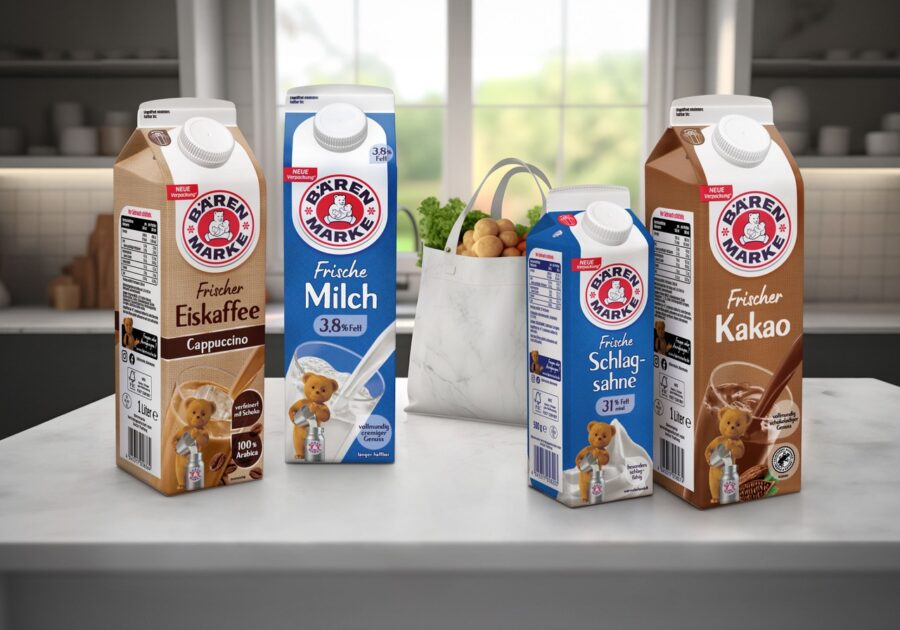
Credit: Elopak
There has been a longstanding relationship between cartons and the dairy industry ever since the classic gable top carton was first patented in 1915 by John Van Wormer. It’s been over 100 years since then but the demand for milk cartons is not slowing down, with more companies switching from plastic bottles to cartons in order to reduce their carbon footprint.
Elopak is supporting the shift from plastic to fibre-based packaging as a supplier of renewable, recyclable beverage cartons and the Pure-Pak gable top carton. Beyond offering a natural and convenient alternative to plastic bottles, Elopak is also a member of the UN Global Compact and one of the companies to set net zero targets approved by the Science Based Targets initiative (SBTi).
It’s therefore no surprise that when German dairy company Hochwald decided to change packages, it turned to Elopak. Hochwald owns the Bärenmarke brand, which has been on the market since 1912 and is one of the most recognisable dairy brands in Germany. Hochwald wanted to give Bärenmarke a modern appearance that also signalled the company’s commitment to sustainability and switched its fresh milk and mixed beverages to Pure-Pak cartons. The company’s regional brands, Tuffi and Hochwald, also transitioned to cartons.
Hochwald’s new packaging not only cuts plastic usage by half but also increases the proportion of renewable raw materials by 10 percent, helping the company to reduce its CO2 emissions.
New products
Dairies aren’t just switching their legacy brands into cartons; they’re also using the packaging to launch new products. In June, Arla Foods signed an agreement with Mondelēz International to market and distribute Milka chocolate milk in Poland, Germany and Austria. Arla’s senior commercial development manager explained that the company chose the carton because “it has a very premium appeal and helps our Milka products to stand out on shelf. In addition, it delivers strong on sustainability.” Shoppers can now find original, caramel, and hazelnut flavour chocolate milk on the shelves in three different sizes of carton.
Cartons are also entering the milk delivery space, which has long been the sole preserve of glass bottles.
Milk & More is the oldest and largest doorstep milk delivery service in the UK, bringing fresh dairy essentials to their customers’ doors. In April the company decided to use cartons for its fresh milk products for the first time ever. Customers now have the option between traditional glass bottles and recyclable Elopak Pure-Pak cartons, which protect light sensitive nutrients in the milk for longer and so preserve freshness.
Following the start of the new school year, Milk & More has also started delivering its school milk to pupils in Pure-Pak cartons.
Companies such as Milk & More have realised that they do not need to choose between sustainability and longevity anymore with Elopak’s cartons offering both. A study conducted by Campden BRI on behalf of Elopak found that Pure-Pak cartons are great at retaining vitamins A and B2 in milk for an extended duration, therefore keeping milk fresher for longer.
As the dairy industry continues to strive to be more sustainable, the transition from plastic to more sustainable packaging will accelerate. Beverage cartons may have initially become popular because of the convenience they offer in transporting and storing milk but now the growth is driven by clear environmental benefits. Companies including Arla Foods, Hochwald, and Milk & More all have very different brands but are turning to Elopak’s cartons so their consumers can have the same freshness they are used to without the guilt of plastic packaging.