Why deforestation-free feed is becoming standard business practice for UK dairy
Richard Carey, stock.adobe.com
Dairy UK has taken an important step in supporting a more sustainable dairy supply chain, adopting a common position on deforestation and conversion-free feed.
Our position takes effect from 30 December 2026. From that point, soy – including soybean, soymeal and soya hulls – as well as palm oil and palm kernel expeller (PKE) present in feed supplied into the UK dairy supply chain will be expected to meet the defined criteria for deforestation-free status.
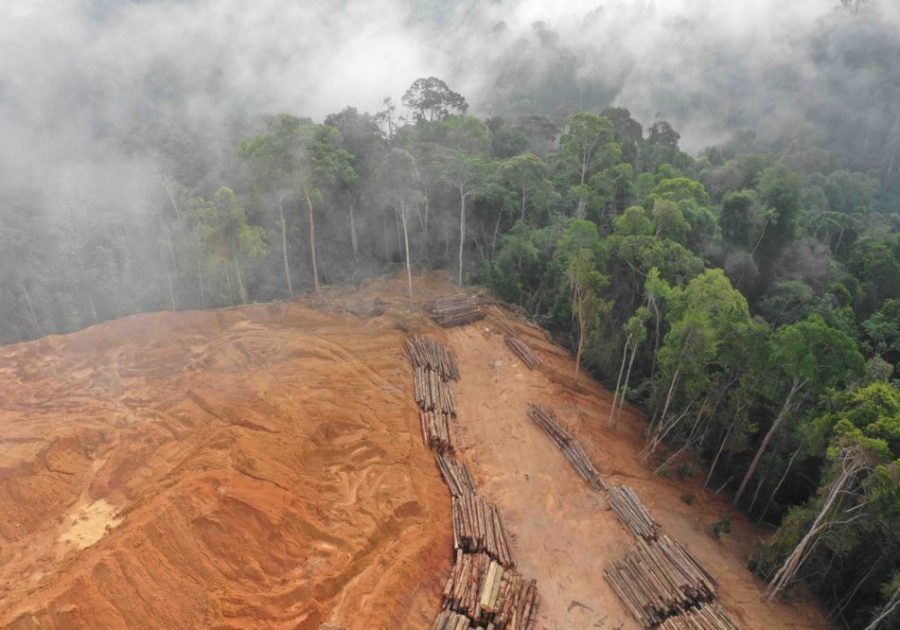
Ethically, morally and socially, this is the right thing to do. Forests and other natural ecosystems are vital for climate regulation, biodiversity, water and food systems. Their protection matters, wherever in the world they are located.
As an industry, we have a responsibility for our impact on the world around us. That means taking action to address the known impacts associated with our supply chains, however complex the task may be. Ensuring that we are not contributing to habitat loss, biodiversity decline or pressure on water resources is a reasonable expectation of a responsible and sustainable food sector. It is part of our licence to operate. This common position puts that responsibility into practice.
There is also a compelling business case for being prepared.
Regulatory expectations around forest-risk commodities are changing. The EU Regulation on Deforestation-free Products (EUDR) will have implications for relevant supply chains in Northern Ireland, while the UK Government has also set out its intention to introduce due diligence requirements for certain forest-risk commodities in Great Britain.
Against that backdrop, a common approach provides greater clarity and consistency across the dairy and feed supply chains. Dairy businesses, farmers, feed manufacturers, merchants, importers and ingredient suppliers need to understand what will be expected of them and be able to plan accordingly – to meet the industry’s needs and be compliant both sets of regulation.
That preparation matters. Supply chains are complex and changes of this kind can’t be delivered by one part of the chain acting in isolation. Establishing a clear and consistent expectation allows businesses to work through the practicalities, engage with their suppliers and put the necessary systems in place.
So, what does this mean in practice?
Our position applies to soy, including soybean, soymeal and soya hulls, as well as palm oil and palm kernel expeller (PKE), whether supplied as straights (fed to animals directly without mixing), compound feed or other blends (mixtures of two or more feed materials). Feed containing these commodities will be expected to meet Modules 1 and 2 of the Agricultural Industries Confederation Sustainable Commodities Scheme (ASCS), or an equivalent standard.
We have worked with the feed industry in developing our approach and will continue to work collaboratively as it is implemented. Delivering an environmentally responsible supply chain requires action at every stage, and it will be through cooperation across our respective sectors that we make this work in practice.
This is part of a much bigger journey. The British dairy sector has long recognised that sustainability requires us to look beyond the boundaries of our own businesses and farms and consider our impacts throughout the supply chain.
Deforestation and ecosystem conversion are global challenges, but that does not diminish our responsibility to address the impacts associated with the products and ingredients we use here in the UK.
For Dairy UK, this is about making responsible sourcing part of standard business practice: setting a clear expectation, preparing for a changing regulatory environment and working collaboratively with our supply chain partners to deliver it.
It is another important step in our journey towards a more sustainable and resilient dairy sector.
By Dr Judith Bryans, chief executive, Dairy UK