Beverage packaging equipment market grows
Every aseptically filled carton of flavoured milk exists because of an industry most consumers never see. Beverage packaging equipment is the invisible engine of the global drinks supply chain, and according to the latest research, it is entering a decade of substantial technological and commercial transformation.
A market intelligence report published by Polaris Market Research reveals that the Beverage Packaging Equipment Market was valued at US$10.4 billion (€9.1bn) in 2024 and is projected to reach US$17.9 billion (€15.7bn) by 2034, expanding at a steady compound annual growth rate of 5.6 per cent over the forecast period from 2025 to 2034. For manufacturers, engineers, investors, and material scientists operating at the intersection of advanced materials and smart manufacturing, the data paints a compelling picture of opportunity.
Beverage packaging equipment encompasses the full spectrum of machinery used to prepare, fill, seal, label, sterilise and palletise liquid products, from bottled water to dairy beverages, juices and alcoholic drinks. The category spans filling and capping machines, labelling and coding systems, cleaning and sterilising units, conveying and handling infrastructure, wrapping and bundling equipment and cartoning machines.
What makes this market especially significant from an advanced materials and chemicals perspective is the increasingly sophisticated materials science embedded in modern packaging lines. New-generation machinery must now be engineered to handle an evolving portfolio of packaging substrates, including recyclable polymers, biodegradable films, lightweight aluminium, bio-based plastics, and multi-layer barrier materials, without sacrificing throughput speed or hygiene compliance. The machinery itself must be built from corrosion-resistant alloys, food-grade stainless steel, and precision-engineered composites to meet global safety standards.
Market growth forces
Surging demand for ready-to-drink beverages: Modern consumers, particularly younger demographics, have embraced an on-the-go lifestyle that places a premium on convenience. Ready-to-drink (RTD) beverages, spanning bottled water, energy drinks, plant-based milks, cold brew coffees and functional wellness drinks, have become staples rather than indulgences. This behavioural shift is translating directly into capital investment in high-speed, high-volume packaging lines capable of handling enormous production diversity.
The World Health Organization’s Global Status Report on Alcohol and Health 2024 highlighted a notable global trend toward declining alcohol consumption and a corresponding rise in non-alcoholic alternatives. This is a trend that is reshaping which categories of beverages require the most sophisticated packaging infrastructure.
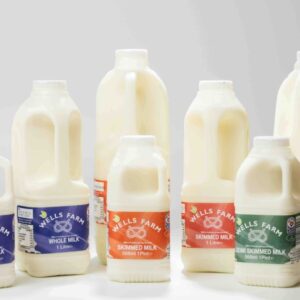
Dairy beverage packaging, in particular, is projected to register the fastest application growth over the forecast period, driven by surging demand for flavoured milks, protein shakes, yogurt drinks, and plant-based dairy alternatives that require aseptic filling and precision sterilisation technologies.
Automation and AI. The case for automation in beverage packaging has never been stronger. Rising labour costs, tightening hygiene regulations, and the relentless pressure to reduce cost-per-unit are driving manufacturers to invest in fully automatic systems. The fully automatic segment held the largest revenue share in 2024, a position reinforced by its capacity to handle large continuous production volumes with minimal human intervention while integrating seamlessly with smart factory systems.
Critically, artificial intelligence is no longer a distant concept in this space, it is an active operational tool. AI-powered robots are being deployed for filling, sealing, labelling, and palletizing. Predictive maintenance algorithms analyse real-time equipment data to identify wear patterns and schedule interventions before costly breakdowns occur. AI-driven material optimisation is reducing excess packaging waste, simultaneously lowering costs and carbon footprints. A 2024 overview published by the US Bureau of Labor Statistics noted that automation in manufacturing is fundamentally reshaping workforce composition and productivity benchmarks, which is a trend fully reflected in this market’s trajectory.
Sustainable as design. Environmental regulation and consumer expectations are converging to make sustainable packaging a non-negotiable design criterion. Manufacturers across North America, Europe and increasingly Asia Pacific are investing in packaging equipment capable of processing recyclable, biodegradable, and lightweight materials. This is where the advanced materials dimension becomes especially strategic: equipment must be re-engineered at the materials level to handle substrates that differ significantly in tensile strength, thermal properties and sealing behaviour from conventional PET or glass.
This green transition is also driving demand for more energy-efficient machinery. Modern filling lines increasingly incorporate variable-speed drives, heat recovery systems, and closed-loop water treatment unit, which are all embedded in advanced material frameworks designed to minimise lifecycle environmental impact.
Growth areas
By type. Filling and capping machines dominate revenue share as the foundational, indispensable component of every beverage production line globally. However, labelling and coding machines are the fastest-growing type segment, powered by regulatory traceability requirements, e-commerce logistics needs, and the rising role of smart packaging in brand storytelling and QR-code-enabled consumer engagement.
By automation. Semi-automatic equipment is the fastest-growing automation segment, fuelled by the explosive growth of craft beverage brands, regional specialty drink producers, and SME manufacturers that require flexibility and lower capital entry points rather than full-line automation.
By application. The dairy beverage segment is the growth leader, reflecting the structural shift toward functional, protein-enriched, and plant-based beverages.
Regional Dynamics
Asia Pacific commands the largest regional revenue share, anchored by China’s massive consumer base, government-backed industrial modernization initiatives, and rapidly expanding middle-class demand for packaged beverages. Rising urbanisation, where the UN-Habitat estimates Asia accounts for 54 per cent of the global urban population, is directly correlated with increased beverage consumption and the need for scaled, automated packaging infrastructure.
North America is characterised by a strong automation orientation and a highly diversified beverage portfolio. High labour costs and the complexity of US consumer preferences, spanning sparkling water, RTD cocktails, functional beverages and health drinks, drive investment in flexible, multi-format packaging lines.
Europe leads in regulatory stringency and sustainability innovation. Germany, in particular, serves as a global hub for high-precision, high-performance packaging technology, with German engineering firms setting international benchmarks for bottling line sophistication and energy efficiency.
Competition
The competitive landscape of the beverage packaging equipment industry is led by multinational powerhouses offering integrated, full-line solutions: Krones, KHS, Sidel (Tetra Laval), GEA Group, Syntegon Technology, Tetra Pak, ProMach, Aetna Group, Fuji Machinery, Nichrome Packaging Solutions and Mitsubishi Heavy Industries.
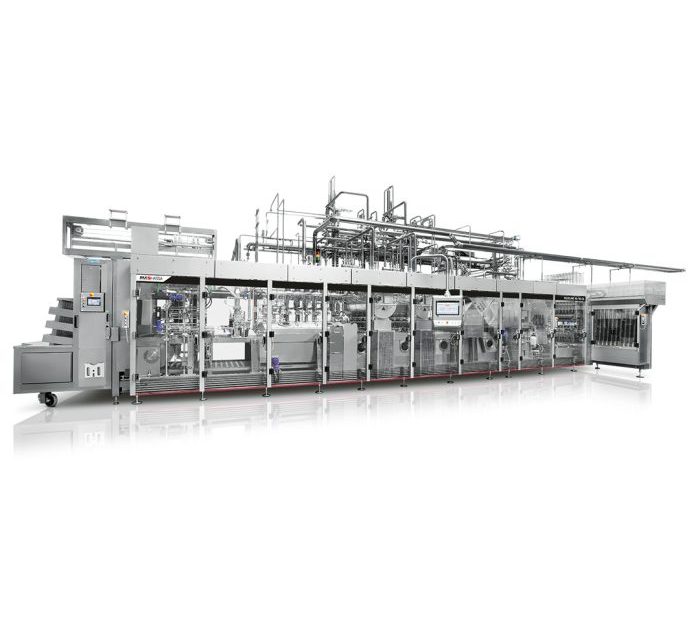
Recent strategic activity underscores the pace of innovation. In May 2025, IMA Food North America launched the Hamba Flexline, a high-speed, cup fill-seal system with integrated sterilisation capable of producing over 57,000 cups per hour. In July 2024, Coesia acquired a minority stake in PWR (Packaging with Robots), a move designed to deliver fully automated, robotics-and-vision-system-enabled packaging lines to the broader market. These developments signal an industry in active, competitive evolution.
The beverage packaging equipment market is far more than an assembly of machines. It is a critical node where advanced materials engineering, digital automation, sustainability science, and consumer behaviour converge. For stakeholders across the chemicals and advanced materials value chain, the US$17.9 billion opportunity by 2034 represents both a commercial prize and a call to innovate.
Moving to monofilms
In packaging, one area receiving particular attention is the move away from metallised films towards coloured and transparent PET structures that improve optical sorting while maintaining packaging performance. The development of mono high-barrier PET films with enhanced sealability is also progressing, building on recent EU-funded research projects designed to maintain compatibility with existing PET recycling systems.
For dairy applications, where packaging must deliver reliable sealing performance, appropriate barrier protection and efficient processing, these developments provide greater flexibility when selecting materials for different product categories.
Retal Baltic Films supports food manufacturers throughout the packaging development process, from material selection and package design to sealing validation and industrial implementation. It is backed by manufacturing, research and supply capabilities across 10 European plastic packaging production sites.
The portfolio includes thermoforming films ranging from mono APET and mechanically recycled tray-to-tray rPET films, chemically recycled PET solutions, sealable APET/PE structures and high-barrier PET-based materials for oxygen-sensitive, dairy applications. Alongside rigid films, RETAL Baltic Films also produces printed and laminated flexible films for lidding, flowpacks, doypacks and stand-up pouches, including mono PET and mono PE solutions with lock-seal, easy-peel and reclosable sealing systems.
Tray to tray
The firm is also expanding its tray-to-tray rPET portfolio, supporting closed-loop recycling for thermoformed food packaging and helping customers increase recycled content while maintaining food-contact performance. In parallel, NEOPET Cycle rPET containing 30 per cent chemically recycled PET offers an additional option for increasing recycled content while preserving the material properties expected from virgin PET.
Advances in sorting, recycling and delamination technologies are also improving the recycling potential of more complex PET packaging structures. PET/PE and PET/PE/EVOH laminates are increasingly recognised within evolving design for recycling guidance, provided the overall packaging design supports effective sorting and recycling. This shows how material innovation and recycling technologies continue to develop together for higher circularity.
Another way that Retal Baltic Films is helping to simplify packaging qualifications is by bringing rigid thermoforming films and flexible lidding materials together as integrated packaging solutions. Compatibility and sealing performance can be validated before materials reach the production line, helping reduce line trials and supporting reliable performance from the outset.
This approach has recently been strengthened through collaboration with packaging technology specialist, machinery producers and retailers, combining PET packaging materials with packaging equipment expertise for thermoforming and tray-sealing applications. The collaboration reflects the increasing importance of developing packaging materials and processing technology together, enabling food manufacturers to implement new packaging solutions.
For dairy manufacturers, this combination of technical expertise, integrated packaging development and continued investment in PET innovation offers practical solutions that improve production efficiency while supporting the transition towards more recyclable packaging.
Future recyclable dairy packaging will not be achieved by materials alone. Progress depends on collaboration between material suppliers, machinery manufacturers, converters, food producers and recyclers to optimise packaging performance throughout its entire lifecycle.
https://www.polarismarketresearch.com