
GB milking herd continues to shrink, reports AHDB

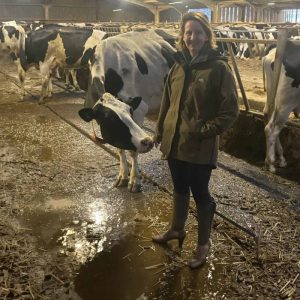
The GB milking herd has continued to shrink, according to the latest data from the British Cattle Movement Service (BCMS). As of 1 July, there was a total of 1.68 million dairy cows in the GB milking herd. This is a 2.9% reduction compared to the same point in the previous year, the equivalent of 51,000 cows, according to the Agriculture and Horticulture Development Board (AHDB). This annual reduction is significantly higher than the 3-year average (-1.3%) for July, but is in line with what has been seen in the herd since January 2019.
However, Felicity Rusk, analysyt, livestock AHDB, notes that the number of youngstock (under two years) has actually risen on the year. While the increase is relatively small at 0.4%, it is reportedly the first time the number of youngstock has risen year-on-year since October 2016.
Impact of coronavirus
With the challenges that 2020 has brought to many dairy farmers, Rusk reports that the UK has seen some interesting changes in the profile of the milking herd between April and July.
Relative to the three-year average (2017-19) change, the UK reportedly saw a larger decline in the number of cows of all categories aged over 4 years. There was a particularly notable drop in the number of cows aged 8+ years, which recorded a 2% decline this year, which is almost double that of the 3-year average. Furthermore, the AHDB reports that there was a larger drop in cows aged 4-6 years (-1.5%) than the three-year average (-1.0%).
The AHDB says it estimates that almost a quarter of GB dairy producers were faced with reducing their milk output from April, as a result of the pandemic. As such, the Board comments that these larger drops in the older half of the milking herd suggest that some producers opted to employ a harder culling policy in order to rapidly curb production.
Cull cow markets prices are almost 40p ahead of the 5-year average, which the AHDB says could provide an incentive for dairy producers to continue to use a harder policy in the coming months. However, with milk production now back in line with pre-Covid expectations, in order to maintain volumes, any reduction in the size of the milking herd would have to be compensated by an equivalent rise in yields.
