ReLoop makes ready-made meals packaging returnable
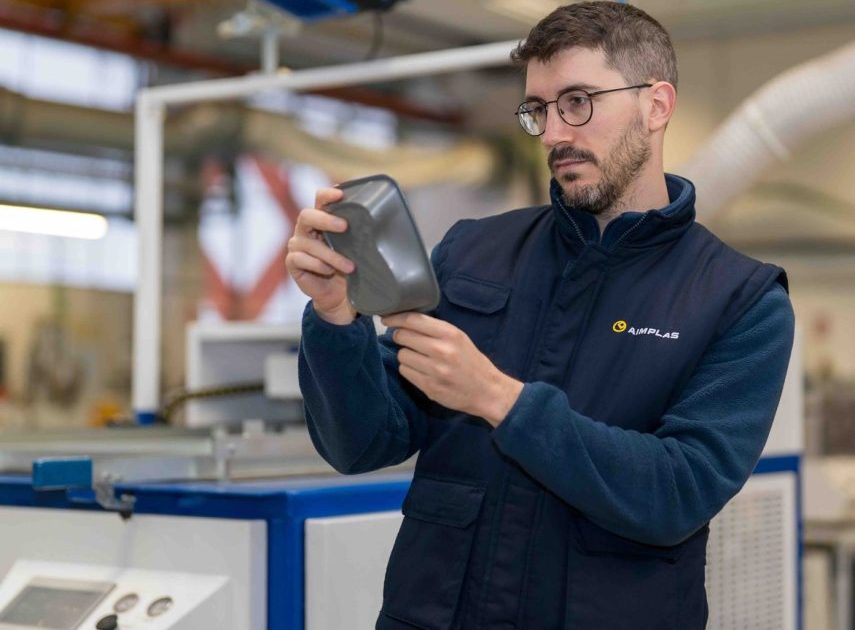
Credit: Reloop
ReLoop has created the first system to combine ready-made meals with the automatic return of reusable, traceable packaging. The circular model, based on packaging designed for at least 40 uses, will reduce the impact of single-use plastic by up to 95%. The companies Ausolan, Awayter, ITC Packaging and the Aimplas Plastics Technology Centre are collaborating on this project.
More than 400 million tonnes of plastic are produced worldwide every year, and approximately half of this is designed for single-use, according to the United Nations Environment Programme (UNEP). Less than 10% of this waste is recycled, a trend that is driving up global plastic pollution. As UNEP executive director Inger Andersen points out, “We will not emerge from the plastic pollution crisis by relying solely on recycling: we need a systemic transformation to achieve the transition to a circular economy.”
It is against this backdrop that ReLoop was launched, a project that integrates, within a single system, the automatic dispensing of prepared food and the return of reusable, traceable containers in a closed-loop system – a solution previously unavailable on the market, designed to reduce the carbon footprint by between 90% and 95% compared to single-use packaging.
The initiative is driven by a consortium comprising Ausolan, a catering for institutions company; Awayter, a manufacturer of IoT and self-service solutions; ITC Packaging, a leading player in packaging; and Aimplas, the Plastics Technology Centre. The four partners are working together to develop a comprehensive circular model that enables the circulation of reusable packaging, monitors its lifespan and manages its return in an automated manner.
The project also fits within an increasingly demanding regulatory framework. In Spain, Law 7/2022 imposes a tax on the use of non-reusable packaging at a rate of €0.45 per kilo of non-recycled plastic placed on the market, which accelerates the adoption of more sustainable solutions without compromising competitiveness.
As Amaia Agirre, director of innovation at Ausolan, explains, “closed-loop reuse is one of the most effective alternatives for reducing the use of single-use plastics, but it requires overcoming significant technological and logistical challenges.”
One of ReLoop’s main objectives is the development of reusable and traceable food packaging, designed to withstand multiple cycles of use throughout its lifespan. The project aims to ensure that this packaging can withstand at least 40 uses, whilst maintaining food contact safety, functionality and an appearance acceptable to the consumer.
To achieve this, the consortium is researching new materials that can withstand washing and drying processes without compromising the quality of the packaging, and which can also be recycled at the end of their useful life.
Another challenge addressed by ReLoop is the management and tracking of reusable containers to ensure that reuse is effective and measurable. The project is investigating solutions that allow the journey of each container to be tracked and the number of times it is used within the system to be monitored.
In parallel, ReLoop will develop an automated canteen that integrates, for the first time, the automated dispensing and return of reusable containers. This is a fully digital, 24-hour canteen service that will allow users to book food and make contactless payments, whilst also incorporating a container return system for subsequent cleaning and reuse. Currently, there are no solutions that combine, within a single system, the dispensing of prepared food and the recovery of containers to put them back into circulation, beyond mere recycling.
The project is also researching specific washing and drying protocols tailored to reusable containers and the food they contain. These processes are key to ensuring cleanliness without damaging the materials and to avoiding food safety risks, as inadequate drying can encourage microbial growth.
With all this in mind, ReLoop is working on the design of a circular model applicable mainly to catering in communal settings, jointly addressing the technological, logistical and business model challenges necessary to ensure its technical and economic viability.
The project is funded by the Ministry of Science, Innovation and Universities through the State Research Agency’s (AEI) 2024 Public-Private Partnership call for proposals and is co-funded by the European Union through the ERDF.