
Governments use school milk to aid dairy development
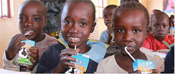
An increasing number of governments and international development organisations are using school feeding programmes to develop the dairy industry and drive economic growth in addition to improving nutrition and educational outcomes, according to Swedish packaging giant Tetra Pak, on the occasion of this year’s World School Milk Day. In Tetra Pak’s discussions with governments, development agencies and NGOs, more and more now raise economic development potential as an important consideration when assessing the merit of introducing a school feeding programme.
“In providing a guaranteed source of demand to local dairies, school feeding programmes encourage investment, expansion and economic growth in underdeveloped rural communities,” Ulla Holm, who heads Tetra Pak’s Food for Development Office (FfDO) notes.
Among the examples of recent success are the following:
· Chinese state-sponsored school milk projects have helped increase farming efficiency, boosting milk production by almost 50%.
· A Kenyan government programme aims to recreate the success of a previous school feeding initiative that increased production of liquid dairy products by 150%.
· A Sudanese school milk programme set up by the leading local dairy processor, creates daily incomes for 250 small holder farmers.
Through its Food for Development Office and network, Tetra Pak cooperates closely with governments, development agencies, NGOs, local dairy processors and farmers to support school milk programmes and dairy industry development. In 2011 6.7 billion packages of milk and other nutritious drinks in Tetra Pak packages were provided to 50.8 million children in schools in over 50 countries, up from 48.8 million children in 2010.
Tetra Pak and the FfDO supported several new school milk programmes in 2012. Among them are:
· A nation-wide programme in Turkey reaching more than seven million children
· A programme in Mumbai for 450,000 children in 1,200 schools
· Programmes in Ukraine and Uzbekistan, each reaching just more than 1,000 children
“Tetra Pak is committed to bring fresh, nutritious and safe foods to children,” Holm says. “Working with governments around the world, we are also helping to ensure that feeding programmes act as powerful catalysts to build local dairy industry capacity, creating new and lasting opportunities for prosperity across whole communities.”/
There have been many successstories, including China, where Tetra Pak China is involved in one of the world’s largest school feeding programmes. Begun in 2000, it now encompasses 8.4 million children. School milk programmes help to build domestic dairy capacity by using only locally produced, processed and packed milk. In introducing better farming practice and management, efficiencies are being realised that saw cattle numbers remain stable between 2005 and 2009 while production of liquid dairy products grew by nearly 50% during that period, from around 11 billion tons to over 16 billion tons.