Working day… David Findlay, The Ethical Dairy
Credit: The Ethical Dairy
Q. What in your background prepared you for your current role?
A tendency to challenge the prevailing narrative. A degree of doggedness, paired with a healthy fear of failure. I am constantly looking for ways to break with the norm which, with hindsight, is much of what’s been needed to run a farm like ours.
Q. Why do you think the industry is looking at your way of dairy farming, and where do you think it will work best geographically?
Our holistic, agroecological approach, with cow-with-calf dairying as the icing on the cake, has attracted the attention of the informed consumer. The ethical food market is growing faster than the conventional one, and that is motivating progressive farmers to step into a premium niche. Once they do, the bigger players start paying attention too.
Geographically, this way of farming can be operated anywhere pastures flourish: temperate, grass-growing regions across the UK and Ireland, parts of mainland Europe, New Zealand and the southern cone of South America among them. It delivers an eco-friendly, ethical, resilient business model and does so profitably, and I think it could prove to be the saviour of the smaller, family-sized farm.
Q. How has the industry changed over the past few years, and why?
The long-running drift toward fewer, bigger, more intensive farms continues, in pursuit of efficiencies and lower-cost food. The drivers are the same as they have been for decades: retailer pressure passed back down the chain, and a policy environment that has rewarded scale above almost everything else. The cost is borne elsewhere – in soil, water, biodiversity, animal welfare, and in the rural communities watching their farms disappear.
Q. Going forward, what do you think is the key issue facing dairy in the UK and globally?
In an increasingly geopolitically unstable world, the dependence of industrial farming on bought-in feedstocks has created real business fragility. We have already seen what that looks like with sharp price fluctuations and food security worries whenever supply chains wobble. Building dairy systems that can absorb that volatility, rather than amplify it, should be the central question for the industry.
Q. What are the most popular products you sell, and where?
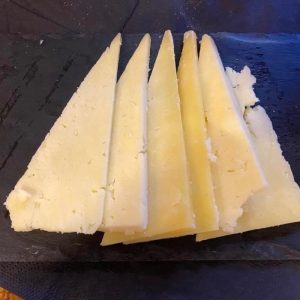
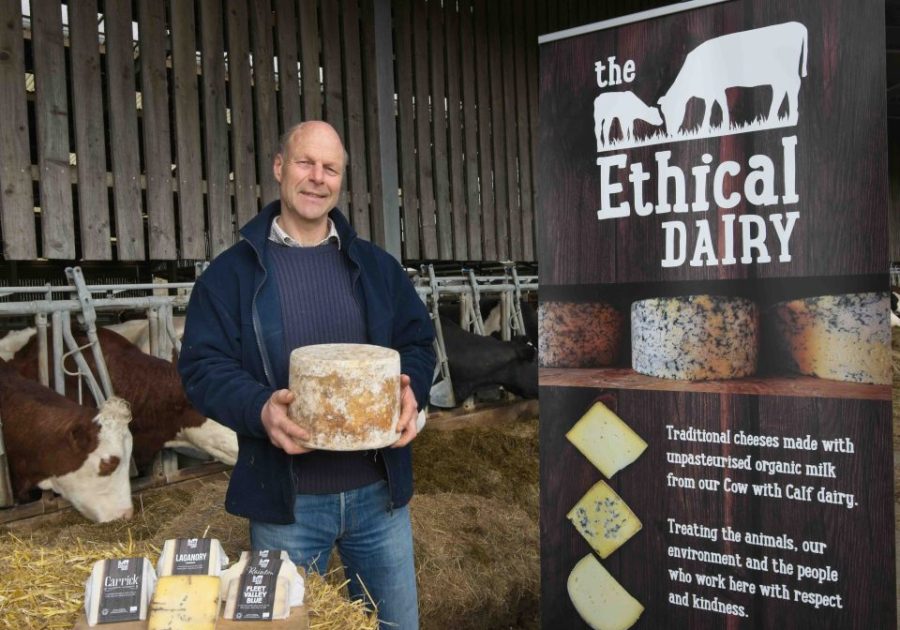
Our artisan, raw-milk cheeses sell well throughout the UK, to informed customers looking to support food producers delivering the public benefits they feel passionate about. We sell direct to the customer via our website, and also through specialist retailers, organic box schemes and through independent cheesemongers.
Q. What do you see as your biggest challenge and greatest achievement?
Our greatest achievement has been to demonstrate that even on a family-sized, marginal upland farm, it is possible to deliver a wide range of ecosystem services, such as climate, biodiversity, reduced diffuse pollution, social value and animal welfare. It’s about doing all this profitably, while still producing meaningful volumes of affordable food. The biggest challenge has been getting the industry to listen.
Q. What does a typical day look like for you?
There are no typical days, which is part of the appeal. I mind the youngstock, do all the shepherding, get on the tractor when needed, fix fences and sort drystone walls, prepare and deliver farm-grown firewood, and take the occasional farm tour or group talk. It keeps me busy.