Food for thought and for development
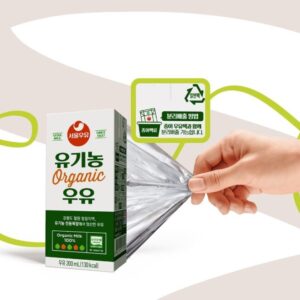
Tetra Pak’s global director for the food for development (FFD) office, Ulla Holm, discussed what the packaging giant is doing with its sustainable development initiatives, after her presentation at the second annual Save Food Congress, held on the trade show grounds at Interpack in Germany. The company has been working on improving children’s nutrition for years, and set up its FFD department in 2000, with the goal of providing expertise for countries’ development. This is an extension of Tetra Pak’s work with partners, ranging from governments and international development agencies to customers and development banks, to develop school milk programmes that dates back to the 1960s.
The seven-person team has built up a network to support and promote growth in dairy. It offers a knowledge centre, school feeding programmes, highly fortified drinks for nutrition programmes, plus agricultural and dairy development programmes. The initiative supports dairy in countries up and down the supply chain: from training of farmers and dairy hubs, to commercial financing of processing plants, to market development and consumer information.
Overall, 64 million children in 63 countries have received 8.3 billion packages of school milk. In China alone, it covers 13.7 million children. “School milk is the driver for dairy development,” Holm explains. “If they use more local resources in producing milk, it reduces the country’s dependence on imports.”
Holm further details the idea of a “dairy hub”, which installs a village milk collection centre and collects milk at a guaranteed rate from local farmers. The successful development of the Chatmohar dairy hub in Bangladesh, in conjunction with local dairy processor PRAN and the FFD office, has evolved so much that three new hubs are planned by 2016. It started collecting 50,000 litres per month in 2010 and quickly moved up to 495,000 litres per month within six months. PRAN has now stopped importing milk powder.