
My (non) sustainable life
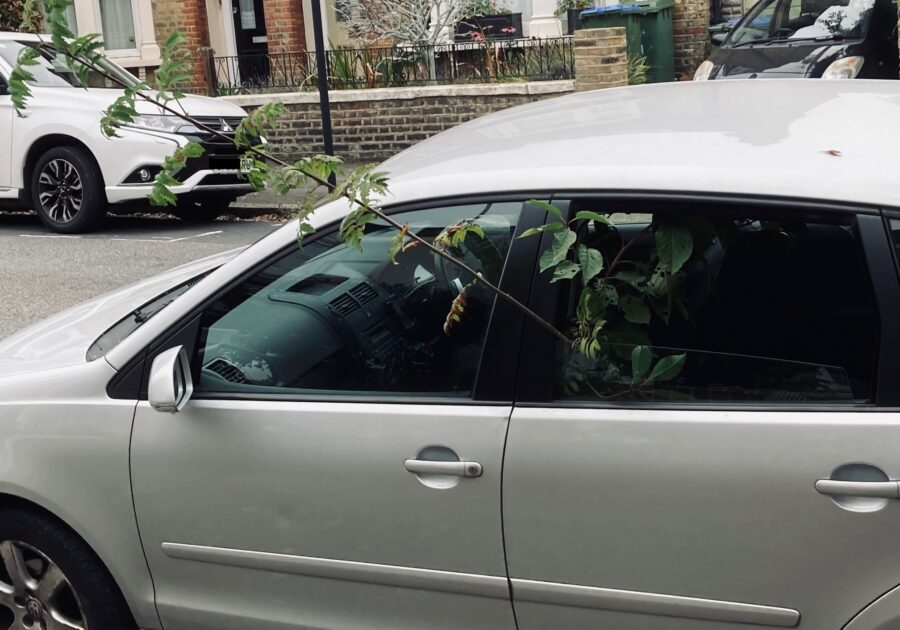
My car with a Rowan tree sticking out, ready to be planted in our local park... (Suzanne Christiansen)
Sustainability is no longer a competitive advantage. Instead, it is a feature of products that consumers now expect, but usually won’t pay more for, or buy more products as a result, notes industry analyst Julian Melletin of New Nutrition Business (see his article in the upcoming March 2022 issue of Dairy Industries International).
It is interesting to see how this once non-existent word has taken over, and also interesting in that nobody quite knows what it is. Proponents of plant-based diets will tell you it’s not eating anything from animals (good?), but while eating plant products that may be very intensively processed (bad?). Meanwhile, farmers argue, as long-term stewards of the land, that animals are a part of the ecosystem as much as plants and their acreage can be both carbon sinks (good?) and carbon emitters (bad, but depending on the type of gas?).
But how does one become sustainable? What does the average consumer do?
So many questions. Let’s face it, it is a challenge. We recycle the metal/plastics/paper that we can, have water collection barrels at the bottom of our gutters, and put a lot of vegetable peels on the compost. I use yogurt pots for seedlings, to grow plants for the wildlife at the allotment to eat later.
However, we also shower just about every day and use plastic containers in the bathroom. Although, in an honest moment here, I have been doing the 100km in 100 days swim challenge at my local lido, which I’ve now completed. I use the showers there most days, which is good for our household’s utility bill, but probably not if we’re looking at overall sustainability issues, I suspect.
I drive my little car most days, either on the school run (several boys, good?) or to my workplace, or both. It is a petrol engine and while it may be not as sustainable as the electric cars, it does the job and I didn’t buy new. So, maybe by using an older car, it is more sustainable as I am not requiring more resources to be mined for all the semi-conductor chips in newer cars, and it is not as big as a SUV? However, I am burning more fossil fuels with the petrol. I think – not sure how the local power plants are fuelled, actually.
As with most things in this life, the more I learn, the less I know. I am very lucky in that I have options for deciding what to eat and drink, and a little car to drive around in. Is it a sustainable lifestyle?
- Suzanne Christiansen, editor, Dairy Industries International.
Keep in touch via email: [email protected]
Twitter: @dairyindustries or LinkedIn: Dairy Industries International magazine.
