International Cheese & Dairy Awards overcome British meltdown
Credit: J Deeprose
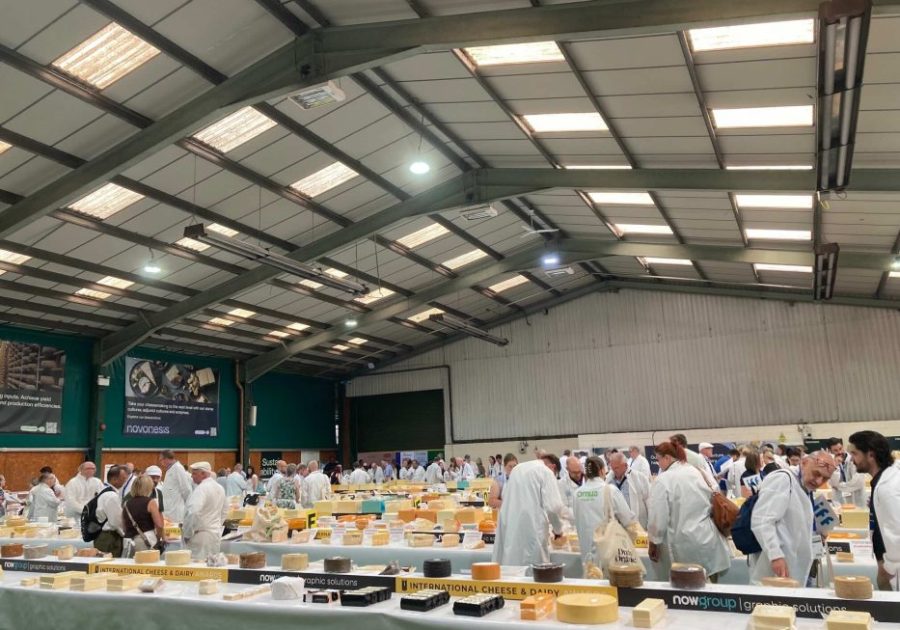
On the hottest UK June day ever recorded, 250 judges surveyed 4,000 cheeses and other dairy products in a (mercifully) air-conditioned exhibition hall. The Staffordshire County Show ground again played host to the ICDA (International Cheese and Dairy Awards) as part of ICDA Expo 2026, a two day celebration of the dairy industry, attracting exhibitors and visitors from around the world.
Another meltdown in the UK coincided with the start of the show, as Sir Keir Starmer resigned as Prime Minister on 22 June. Hopefully legislation for improvements to cheese exports to Europe will not be shelved by his successor.
Judging teams and stewards were allocated in advance for Wednesday, and the meeting of old and new friends for coffee and briefing, was such a great start to the day. Dai Williams, who cheerfully choreographs this group of cheese professionals, chefs, dairy students and buyers announced that there were 60 new judges for 2026, as some of ‘our older statesmen have hung up their cheese irons’. He welcomed these new judges and hoped they would enjoy the experience and have a happy day, noting, “Once you’re on my list it’s hard to get off it.” Most judges really look forward to the annual invitation.
With my fellow judge, Emma Shawcross, chef and cheese ‘educator’ for children in Cheshire, we were given a wide range of classes, including one of the expanding areas of retail and catering – cheese for cooking, in this case grilling. This was a big class including halloumi, paneer and two new varieties – ‘bread’ cheese and cheese dogs. The ladies cooking these samples for all the teams, found it very challenging in the heat.
Some we judged seemed to be very bland, and when we checked our results next day, the Gold went to Bread cheese from the US (Carr Valley Cheese Co Inc); Silver to Bradbury’s for its Cheese Dogs (packed like frankfurters) and Bronze for Oumi Grilling cheese (similar to halloumi) also from Bradbury’s.
We were given several classes of French cheese, one of which was in the popular ultra-chilled section for judging soft cheeses. DP258 included an Epoisses, soft golden rind washed cheese from Burgundy. We gave this the Gold medal, as it was unctuous, with a pungent rind, but a delicate and savoury, full flavoured paste. Silver in this class went to a Munster, with a rich and distinctive aroma and long finish. Savencia and Sodiaal market these cheeses (and many others).
One class we judged was small. Only three cheeses, and one had not arrived. There can be a problem with such a limited selection, and we only awarded a silver medal. It was queried, but we were not prepared to give a gold and silver, just because they were the only entries. One was good and representative of the variety of cheese, and the other was not. A gold medal gives kudos, and also marketing advantages, so must be awarded to a high quality cheese, carefully prepared for the competition.
We very much enjoyed the process of judging, ironing some cheeses, and having the opportunity to assess and taste so many different varieties. We prepared to start on a class of soft cheese, so asked our steward, Tasha for a knife. In her bag (kitchen roll, apples, wipes, water, pens etc) was a small wooden one. Because of Health and Safety rules, one has to apply to use a sharp knife. It did take a bit of time and was rather frustrating, while walking around with a very sharp cheese iron doesn’t seem to count.
As the ICDA also includes other dairy products, we diverted and had an interesting time looking at the medal winning yogurts, butter, cream, milk and the competition for cheeseboards, which is always a visual treat. For the UK market, the silver cups awarded in this important sector of the competition can influence the major retailers. With the current trend towards higher protein, there was more cottage cheese than in recent years.
At the end of our judging, we were able to visit the stands in the main hall of the Expo, which was lively with companies covering the whole dairy industry. In the centre was Bradbury’s cheese market with stalls of smaller but quality British and European cheese makers. One of its clients won the Best French trophy for blue cheese with a black label Roquefort, and it was good to be able to taste this. Also on display was Old Amsterdam, a warm aged Gouda, which brought back happy memories of a visit to Westland’s maturing rooms.
The Italians had several stands this year, highlighting the growth in retail sales, not just for its famous Parmigiano, but Pecorino and Gorgonzola. To demonstrate lesser-known Italian cheeses, there were popular tasting sessions of cheese paired with wine, guided by Charlie Turnbull (not speaking Italian), a well-known cheese expert. The Italian Agency also provided prosecco and canapés for the prizegiving on Thursday morning.
Over the years, it has been hard to attract a good audience, and even some of the prize winners the day after judging. Sometimes, the Supreme Champion has been announced on the same afternoon, which puts a lot of pressure on the Supreme jury and doesn’t heighten the anticipation.
So, this year, and with the addition of the Expo lounge which was a very welcoming space, on Thursday, after some dairy professional meetings and seminars, a good crowd came together to celebrate the winners. The array of silver cups, rosettes, and other prizes is part of the concept of the awards and its historical roots in UK dairy life. They have often been donated in memory of families or personalities, augmented by modern dairy and technical companies.
Retailer classes offer both a window on customers’ favourites, and the willingness of buyers to offer new tastes. Waitrose came up top overall this year with Supreme Dairy retailer, with Booths supreme for cheese.
One very competitive feature of these cheese awards is always the prize for the best Stilton. The making of this British classic is regulated and restricted to the three counties of Derbyshire, Leicestershire and Nottinghamshire. Long Clawson has previously won Supreme Champion in 2024, and still features heavily. This year, however, those of us judges who are ‘extra mature’ celebrated the renaissance of Hartington Creameries in deepest Derbyshire, which won champion Blue Stilton, and a gold for its White Stilton. This creamery was shut by Dairy Crest, and a dedicated band restarted production on the old site, so it is 24 years since they won such an award. Such willingness to carry on making such an iconic cheese by hand to a traditional recipe, is a legend in cheese making.
There was a sense of excitement because the two top prizes could not be further apart geographically. Reserve Champion, was Bourne’s Cheshire cheese, and the Supreme Champion trophy was awarded to Lactalis Mainland Dairy New Zealand. The blue cheese from Kāpiti cheesemakers, Kikorangi Blue, was impressive and wowed the judges. Sadly no-one from New Zealand was there to receive the accolade.
The classic mature Cheshire runner-up, cloth-bound, using traditional starter cultures, has been made at Bourne’s Malpas farm since the 1930s. Using its own milk from cows grazing on local salt-marshes gives a distinctive fresh flavour. Judges kept coming back for more. Hugo and Charlotte Bourne and their family were thrilled with this recognition at the International Awards.
Thanks were given to the sponsors of the show, and to the many volunteers in the local cheese community – keeping the occasion both personal and corporate, and a pleasure to be part of. Judging cheese is such a privilege, and all those who took part at ICDA this year realised again the importance of maintaining quality and diversity. Artisan cheese makers, large dairy companies, retailers, chefs and food writers – all of us want to appreciate and celebrate cheese.