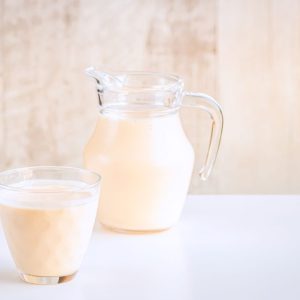
The four Ps of dairy consumption
There appears to be a significant gap between consumers’ perceptions of dairy products and the actual scientific reality, and this gap poses a challenge for the entire dairy industry, as well as for public health educators. Perception, promotion, product and price. Do health concerns and health messages influence the consumption of dairy products? The team at Food for Health Ireland thinks so.
A review of the relevant literature suggests that shoppers widely perceive milk and dairy products to fit into different ‘categories’, related to weight control, bone health, naturalness and allergy. While milk is an important source of vital nutrients, many regard it as a child’s drink and others think of it as fat-laden. However, contrary to popular belief, ‘full-fat’ milk has a documented maximum fat content of just 3.9 per cent. And as dairy consumption decreases with age, females (especially teens) tend to opt for products with a more ‘slender’ low-fat image.
Is fear of fat now the norm?
In the public’s mind, the words ‘full-fat’ have become synonymous with obesity and overweight, and the words ‘low-fat’ and ‘fat-free’ with heart health. Low-fat and fat-free foods are now in vogue with many consumers, but as these products are often high in salt and sugar to compensate for losses in texture or taste, they could potentially lead to other unintended health consequences. What really matters is the type of fat in our diet. ‘Good fats’ (monounsaturated and polyunsaturated) are actually heart-friendly, and even saturated fats can be good for us since our bodies require them for certain biological functions.
While consumers’ perceptions of dairy fat have been largely negative, they generally believe milk and dairy products to be essential for bone health and reduced risk of osteoporosis, which is in agreement with scientific findings(1,2,3,4). They also accept the ‘naturalness’ of dairy products, such as yogurts, and this wholesome image is strengthened when an ‘organic’ label is attached. However, the rise in demand for ‘free-from’ foods means many still choose to avoid certain dairy products, with some believing that there are links with intolerances or allergies, even though only a small percentage of the population is actually clinically diagnosed with a food allergy.
Re-thinking milk marketing
Pairing different dairy products with specific health benefits can help to maximise consumer acceptance of, and dispel common misconceptions about, dairy products. For example, day-to-day commodity milk products that offer ‘naturalness at low cost’ may appeal to many consumers. Some may opt for the ‘better-for-you’ functional foods that offer an additional health benefit beyond basic nutrition. And still others may choose tasty treats such as cream and ripened cheese that could appear more ‘naturally indulgent’ than competing products such as desserts or confectionery.
But it seems that whether through taste, price or increased health consciousness, consumers will continue to have a variety of motives for the dairy products they choose. Long-term, it may be that increased acceptance will require targeted education campaigns that help us really rediscover the benefits of dairy.
For more information, please contact Dr Amanda Forde at FHI
Email: [email protected]
Tel: +353 21 4205191
Web: www.fhi.ie