The state of the market
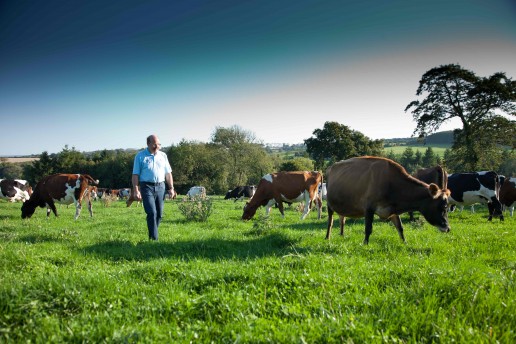
Laurence Harris, founder of Trioni, a producer of organic milk products in Wales, UK discusses how the current cost of dairy is affecting business
Q. How is the current state of the dairy market affecting the farmer?
If supermarkets and smaller retailers continue to put pressure on processors to lower the delivered cost of milk through cutting returns to dairy suppliers, then the downfall of the UK dairy industry is inevitable. Particularly impactful on smaller dairy farmers, they need to stand together and make sure the current losses being made do not continue and affect our future dairy farmers.
For the farming unions however, this is easier said than done, despite their lobbying efforts. Farmers invest huge amounts in order to deliver and need to be rewarded accordingly. We need to educate retailers and their consumers on the importance of UK dairy produce and its corresponding economic and environmental value, otherwise it will end up a dying trade.
Q. What impact have you seen in the Welsh market specifically?
In terms of overall dairy decline and departure of farmers from the region, sadly this isn’t a new topic within the Welsh market. There are now 40 per cent fewer dairy farmers in Wales compared to 2002, and the average age of farm holders across the industry has risen, with the majority of us in the UK now over the age of 55. Fluctuations in the price of milk have characterised the market for a number of years, with natural wastage being compounded by a poor return on capital for hours worked. This is also presenting a variety of challenges.
Having said all that however, I am in full support of the Welsh government’s ambition to continue to aim for a strong, dynamic, market focused Welsh dairy industry. We have the most ideal land within the UK for dairy production, so it would be a shame to see this go to waste. A higher milk price with less bureaucracy would encourage more people to enter the industry and would regulate competition for the benefit of smaller farmers.
This is going to be a hot topic for the Welsh Affairs Committee at an upcoming British Parliamentary inquiry, with changes to the basic payment scheme and the ending of EU milk quotas on 31 March 2015 also due to be scrutinised. The abolition of quotas is a particularly important step for the industry, as it will give Welsh farmers freedom to expand and capitalise on growing global demand for UK dairy. Exporting abroad has certainly helped my organic dairy brand Daioni to stay profitable and continue to grow as a business, so I am interested to see how this initially pans out in the first few months.
Q. What do you think should be done about helping the situation in the industry?
Across the board, more needs to be done to better communicate the cost of milk production in comparison to water; otherwise we will see even more farmers devalued and demoralised, and leaving the industry. Additionally, many independent retailers will have an affinity with smaller dairy farmers, although their listings aren’t as heavily weighted as the demand from supermarkets.
Although these current events aren’t having as traumatic an effect on the organic dairy sector right now, we foresee it will soon spread across the entire industry and could even affect cheese production and prices with similar consequences. This is particularly worrying when coupled with Russia’s imposed sanctions on EU food imports, which lead to a surplus of cheese and a similar reduction in prices.
We don’t want a future where profit margins are so low that factory farms become a preference, and so hope the government’s investigation helps bring our sector out of the red and back on track.
Q. Going forward, do you have any ideas about how to future proof the industry?
In an ideal world, implementing transparent and stable pricing mechanisms for liquid milk and cheese suppliers would be the answer to bringing back a sustainable milk price. Of course, as mentioned earlier, this is dependent on fairer pricing strategies being put in place by the UK supermarkets, as retail own supply has somewhat confused the market price.
Elsewhere, we need to continue to promote ‘Brand Britain’ across the globe, through authorities such as the UKTI (UK Trade & Investment) and Defra (Department for Environment, Food & Rural Affairs). I recently attended a trade mission with Defra Secretary of State Liz Truss to do just this, along with a dozen other British food businesses. The minister was steadfast in her desire to see more UK producers celebrating their heritage and showing greater patriotism to fend off foreign rivals. In the dairy industry, promoting the Red Tractor logo on all own label, British milk and cheese products is a great way to capture international interest and investment.
Q. What have you done with your operations?
We are looking to increase our international presence, focusing on emerging markets where demand for British organic produce is growing particularly fast. Geographically, we’re planning to expand our UHT range of products, with a number of Far East countries on the horizon. I personally feel the world is leaning more towards UHT production, as its lower carbon footprint makes it a more sustainable practice and we are ensuring our operations reflect this.
The exporting side of our business has grown, particularly over this past year and we’d like to consider exploring similar opportunities for our other ranges, including our energy drinks. Having the option to diversify in this way is crucial to ensure our business continues to grow organically, as it has done over the past 16 years.