Todd Gilliam, industry leader for consumer packaging goods, Americas region, Rockwell Automation team
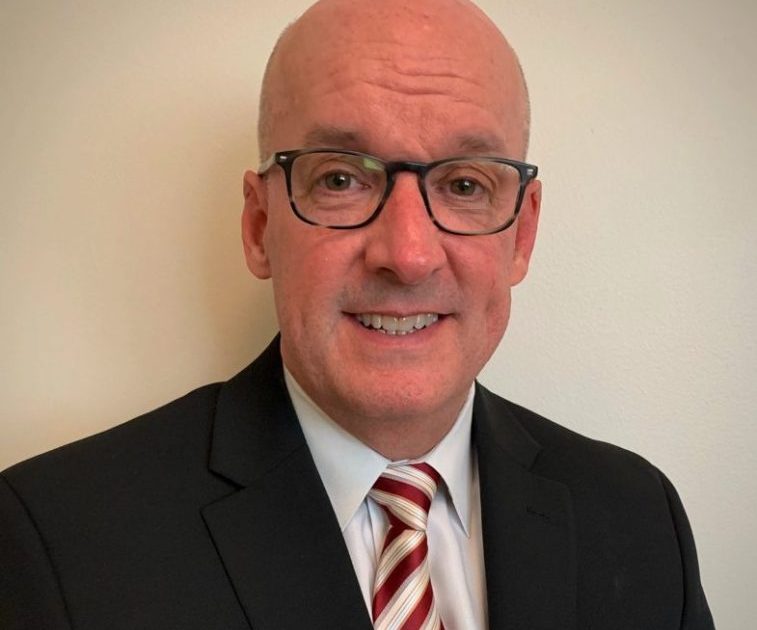
Credit: Rockwell Automation
Q. What in your background prepared you for your current role?
I have been around for a long time and worn a lot of hair nets. I have a lot of experience in the real world seeing those food and beverage systems. My background is bit of a mix between information technology and operational technology. It’s a good hybrid of that. Almost all of my career has been exclusively food and beverage focused. We are in the community, we go to the associations and “club meetings,” and I think that serves myself and my peers well in supporting our customers.
Q. Could you explain about digital twinning and its benefits?
Our manufacturers use digital twinning in two categories. The first will use it for the emulation of, for example, a new packaging line or process in a digital environment, before physically commissioning the actual line. The intent of its use is to model any physical aspects, to run simulations on speeds and arrangements, and to determine what performance under real world conditions might look like. The goal is to identify bottlenecks and concerns beforehand, allowing us to work through kinks before putting the assets and labour into a production environment.
We also use digital twinning on existing production lines that are not performing up to speed. If there are any throughput, quality, speed or output concerns, we want to better understand how a line would react if we changed something with the existing process. Digital twinning is a way to do so without disrupting production.
Q. How do you determine when your replicas are good enough to be implemented?
Model validation is the ultimate goal before implementation is considered, and any model is only as good as the data that supports it. We spend a lot of time validating the accuracy of our data. If you haven’t modelled the physical asset or piece of equipment accurately, then you aren’t going to have a good predictive model.
Our second concern is in determining how a model will integrate to our other systems. Our production lines are rarely stand alone, so knowing how they might connect to existing assets is essential.
Comparing to previous benchmarks is our usual sanity check. We ask, is this kind of performance validated against previous benchmarks? After those checks are done, we run smaller pilot or proof of concept checks, and those being clear gives us more confidence that we have a valid predictive model. The processing side is also important. Blending, mixing and pasteurisation are all part of the conversation as well as packaging, when you’re talking about digital twinning.
Q. What are the biggest challenges you currently face?
There’s not a lot of awareness or education around more non-traditional uses of digital twinning. Digital twinning is also a very rapidly moving category. With cloud and computer power advancing so rapidly, along with the algorithms that we use, we have to keep a very fast pace to keep up with the technology.
Q. What do you think will be the next big steps for food/beverage manufacturing?
There is a lot of concern around the ability to attract, recruit, train and retain workers. For example, we need to figure out how we can use technology to replicate what cheese makers were doing. The art of cheese making is not easily learned – it’s a craft. Artisan cheese makers will work for many years, and then they will retire or move on. So, how can we leverage AI, augmented reality, digital recipes or other next generation apps to replicate the tribal knowledge in that person’s head? How can we move production forward even without the historical resources we would have had?
What many of our producers are asking for at the moment is, how do we advance our operation to a more autonomous model, and what is the best way to future proof our operations? A typical question is, “what are other people doing?” Companies want to know if they are ahead or behind competitors, and they want to learn from others like themselves.
Q. What are your sustainability goals?
Our sustainability goals are to help producers be better stewards of the environments and the communities they serve and produce for. A large part of the philosophy of how we develop and put products into the market is that they are as energy efficient as possible. Consumers resonate with companies that are environmentally friendly. The conservation of water is one of the hot topics at the moment. We are working with our clients on the ability to reuse or recycle water in their operations.
Q. Outside of work, what are your hobbies/interests?
I am a runner, and I try to do that as often as I can. My family is also important. I have two grown daughters, one of whom is graduating from university in a few days.