Convenience is key in cheese packaging for consumers
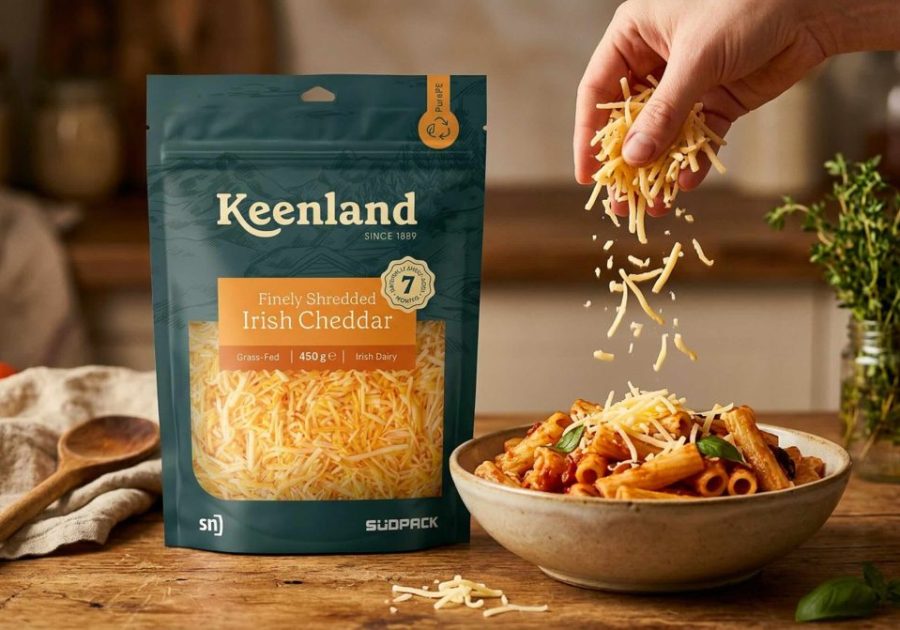
Credit: Südpack
What is working for consumers in flexible packaging, is convenience, along with recyclability. Amcor, a company developing and producing flexible packaging, announced the results of a new consumer study, conducted in collaboration with French cheese producer, Laïta, which highlights the importance of convenience and recyclability for French hard cheese buyers.
The joint study, conducted in March 2026 among more than 500 French hard cheese consumers, shows that convenience was identified as the most influential packaging attribute for in-store purchasing decisions, ahead of other elements such as visuals (colours, graphics), uniqueness of design, sustainability claims, textures, and even material used. Notably, seven out of ten consumers (70 per cent) consider an easy-reclose feature important when buying hard cheese products.
Reflecting growing consumer attention to sustainability, the research also reveals that sustainability packaging attributes influence purchasing decisions for 67 per cent of French hard cheese buyers. Recyclability ranks first among the attributes tested, alongside further claims such as using less plastic, using less material overall, using recycled plastic and reducing carbon footprint.
Amcor and Laïta have recently launched new packaging for Paysan Breton Emmental cheese blocks, Laïta’s flagship brand, using Amcor’s AmPrima PP film in the Easy Pack format. Launched in the 220g format of Paysan Breton Emmental cheese, the new packaging has been introduced across nearly 2,000 points of sale.The new structure replaces a previous multi-material solution, which was composed of three different types of non-recyclable plastic. Now, the pack is designed for recyclability within the polypropylene (PP) flexible-film recycling stream, and the solution remains fully compatible with Laïta’s existing packaging equipment while maintaining all key functionalities, including sealing integrity and line efficiency. It also directly addresses consumer expectations for convenience, featuring an adhesive tape on the back for reclosability, ensuring an optimal shelf life.
The new AmPrima PP film delivers a 63 per cent reduction in carbon footprint and a six per cent reduction in plastic weight compared to the previous solution, thereby lowering Extended Producer Responsibility (EPR) fees, the company says.
“Our collaboration with Laïta reflects our commitment to developing packaging solutions that balance sustainability with performance and consumer convenience. Our research findings provide strong reassurance that we are aligned with what matters most to consumers,” says Laura Delapeyronnie, marketing manager, dairy at Amcor.
Debuting new pouches
Another developer of eco-friendly films is film manufacturer Südpack, which debuted two recyclable pouch concepts from its CarbonLite film family at interpack this year. The first was a PurePE stand-up pouch with a zipper closure for grated cheese, along with a PP-based stand-up pouch with an integrated spout for fruit purée. Both materials are already designed to meet the PPWR recyclability requirements for 2030, making them a future-ready solution. For pouch production, SN Maschinenbau offered a high-performance FLH 300 hygienic machine, along with the new HSF 100 spouted pouch packaging machine, designed for small to medium output volumes and fast product changeovers.
“Processing recyclable packaging materials is more complex and more demanding than working with conventional materials, which makes closer collaboration with the packaging material manufacturer essential,” explains Felix Eberhardi, marketing team leader at SN Maschinenbau. The family-owned company SME SN Maschinenbau works with Südpack, as well as other partners.
The CarbonLite Doypack PurePE for grated cheese, running on SN FLH 300 packaging machine, is a pouch concept with recyclability and performance. Designed as a PE mono-material solution, it can be returned to the appropriate material loop after use. The films showcased at interpack offered stability comparable to conventional film laminates despite a low thickness of 85μm. Due to tailored barrier properties, there is no need to compromise on product or aroma protection either. A practical PE-based zipper system enables convenient opening and reclosing of the pack. With the films’ high thermal resistance, it can be integrated reliably and with full process stability into flat or stand-up pouches, the companies say.
For the production of stand-up pouches, SN Maschinenbau featured the FLH 300, a horizontal pouch packaging machine for products such as grated cheese. The model features hygienic design and a rotary system for forming, filling, and sealing both conventional and recyclable flat and stand-up pouches from reels (FFS). Its design ensures the machine meets the strictest requirements for food packaging and ease of cleaning. Depending on the product properties and pouch size, output rates of up to 270 pouches per minute can be achieved. Format changeovers are quick, with the process largely automated and controlled via the machine’s control panel (HMI).
Meanwhile, expansion of packaging continues apace. For example, in the UK, Technosys, part of the Autopack Group, is expanding its Gainsborough production site and team to meet demand for its UK manufactured vertical form fill and seal (VFFS) machines. The business has taken additional factory space, doubling its current footprint, to cope with increasing demand from both the UK and European customers, the company says.
The move allows Technosys to build more machines and the ability to demonstrate and test full production lines for its customers. In addition, it will support two new models, launching later this year, which will also be manufactured in the expanded facility.
“The expansion is great news for our business and our customers with a stronger, larger manufacturing and service base,” said production manager James Nelson. “We manufacture cost-effective machines that can help businesses automate and improve their productivity, which everybody is looking for right now. We have the right machines at the right time for the market.”
The expansion is part of a £3 million (€3.5m) investment plan by the Autopack Group across its UK sites. “This investment underlines the ambition we have for the group,” adds Wayne Kedward, managing director of Autopack Group. “We are ready to invest in our acquisitions and give them the tools to grow. We also want to nurture our workforce and expand our team to give our customers the best service and expertise.”
The range of equipment available includes the simple A100 VFFS, a low-cost machine, through to the A400 with multiple formats and adaptations available. The machines are used for applications including food, chemical, petfood and component packs.
Topics
consumers convenience flexible packaging pouches VFFS
PeopleFelix Eberhardi James Nelson Laura Delapeyronnie
OrganisationsAmcor Laïta SN Maschinenbau Südpack Technosys
Regions