The true cost of incomplete traceability in dairy processing

CEO Anthony Connolly. Credit: SoftTrace
Traceability has long been a foundational requirement in dairy processing. Today, however, it has evolved into something far more critical: a defining factor in a plant’s ability to manage risk, protect consumers, and remain compliant in an increasingly demanding regulatory environment. Yet across the industry, a gap still exists between what plants believe is full traceability and what is actually achievable under pressure.
Most dairy processors will say they have traceability under control, and in many cases, they do. The data exists. But it is often spread across production spreadsheets, receiving logs, ERP systems and QA documentation. The gap we see across the industry isn’t a lack of data; it’s the time it takes to connect it when it matters most. That’s where risk starts to grow.”
When an issue arises – a customer complaint, a potential contamination event or an auditor request – teams are often required to pull information from multiple sources, reconcile discrepancies and reconstruct product history manually. What should take seconds can take hours.
Speed required
Under the Food Safety Modernization Act (FSMA), traceability is no longer evaluated solely on whether records exist, but on how quickly they can be produced. The US Food and Drug Administration requires that traceability records be provided within 24 hours of a request, covering critical tracking events and key data elements across the supply chain.
At the same time, industry standards that are often aligned with SQF or BRC, which support FSMA compliance, raise the bar even further. Annual mock recalls are required to demonstrate the ability to trace 100 per cent of a product within just four hours, reinforcing that speed is not just a regulatory expectation, but an operational necessity.
This includes the ability to clearly document milk sources and supplying farms, receiving and processing events, equipment and production pathways, lot transformations and batch relationships, packaging materials and finished goods, and distribution and customer shipments.
This expectation represents a significant shift. Traceability is no longer just a documentation exercise, it is a real-time operational requirement.
Exposure
The cost of inadequate traceability is not theoretical. It is measurable, significant and rising. As regulatory expectations tighten and supply chains grow more complex, the financial consequences of delayed or incomplete traceability continue to escalate. More importantly, a single failure can severely damage a company’s reputation and erode hard-earned brand loyalty – sometimes permanently.
Industry data indicates the average food recall exceeds $10 million in direct costs alone, while inefficient traceability drives over-withdrawal, dramatically increasing recall scope and expense. Meanwhile, the indirect impacts, including lost business, regulatory scrutiny, litigation, and long-term brand damage, can multiply total losses well beyond the initial event.
In many cases, the primary driver of cost is not the issue itself, but the inability to quickly identify the scope of affected product. Without precise traceability, companies are often forced into broader, precautionary recalls, thus removing more product than necessary and increasing both financial and operational impact.
Fragmented systems
Many processors continue to rely on a combination of spreadsheets, paper logs and disconnected systems to manage traceability. While these tools may support day-to-day operations, they often fall short under time pressure. This creates a common blind spot.
Traceability appears sufficient, until it must be proven quickly and accurately.
When faced with an audit or investigation, teams may need to pull data from multiple systems, reconcile inconsistencies, and/or rebuild product genealogy manually. What should be immediate, becomes a multi-hour process.
Speed and risk
In a recall scenario, time directly impacts outcome. Every hour spent tracing product can expand the potential scope of a recall, increase the volume of product withdrawn, elevate regulatory scrutiny, and increase the risk to brand reputation.
Modern traceability is no longer defined by recordkeeping, it is defined by response time. The difference between minutes and hours can determine whether a recall is targeted and controlled, or broad and costly.
Case Study: Dairy State Cheese
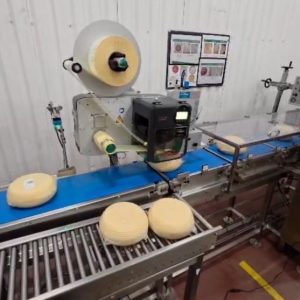
Located in Rudolph, Wisconsin in the US, Dairy State Cheese is a facility with more than 70 years of history. Today, the plant is undergoing significant modernisation and has transitioned into a dedicated parmesan production operation, processing approximately 1.7 million pounds of milk daily.
Like many long-standing operations, Dairy State Cheese previously relied on spreadsheet-based tracking, manual documentation, and disconnected data sources across departments.
While functional, this approach introduced challenges, such as:
- Time-consuming traceability during investigations
- Increased potential for human error
- Limited confidence in data accuracy under audit conditions.
As production volume increased and operations evolved, it became clear that traditional methods would not scale effectively.
“When you’re upgrading a plant, everyone focuses on stainless, equipment, and throughput. But real modernisation goes beyond that. SoftTrace became a critical part of how we connect and understand our entire process –not just how we run it, but how we prove it,” says John Zirbel, COO of external manufacturing at Cheese Merchants.
SoftTrace partnered with Dairy State Cheese to develop a traceability solution aligned to the plant’s specific process flow, integrating data across milk intake, production and packaging, into a unified system.
The result was complete, end-to-end traceability across operations, immediate access to product genealogy, with audit-ready documentation available in seconds, and reduced reliance on manual data reconstruction.
Beyond operational improvements, the impact is most evident during high-pressure scenarios such as audits or potential recall events.
“The real test isn’t whether you have the data. it’s whether you can prove it under pressure. SoftTrace gave us the ability to answer traceability questions immediately, without scrambling,” noted Avneet Sonna, director – QA and compliance, external manufacturing at Dairy State Cheese.
As the facility continues its expansion and modernisation efforts, traceability has shifted from a reactive process to a proactive, integrated capability.
Control
Traceability is no longer just about meeting regulatory requirements; it is about maintaining operational control. Today’s dairy processors require a connected, end-to-end view of their process, immediate access to accurate and reliable data, and the ability to respond without delay or disruption.
Increasingly, this level of transparency must also be achievable without requiring an auditor to be physically on-site.
Traceability is no longer defined by whether data exists.
It is defined by how quickly it can be delivered and how confidently it can withstand scrutiny. In an environment shaped by 24-hour regulatory expectations, rising recall costs and increasing operational complexity, the question is no longer, “Do we have traceability?” It is, “How long does it take to prove it?” Because in today’s dairy industry, hours create risk, while seconds create control.
Topics
compliance Food Safety Modernisation Act regulatory risk traceability
PeopleOrganisationsCheese Merchants Dairy State Cheese SoftTrace US FDA
Regions