First bioplastic made from whey
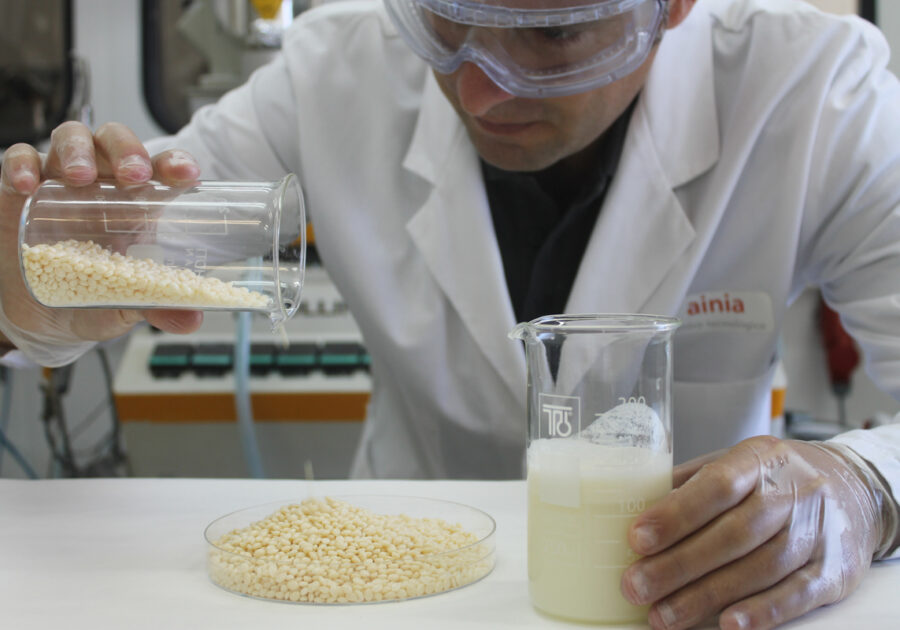
A team of researchers has achieved the first bioplastic material made from whey derived of cheese making. Specifically, it is polyhydroxybutyrate (PHB), obtained by a fermentation bioprocess of whey, a by-product from the cheese industry.
The Life Wheypack European project aims to respond to one of the current concerns of the dairy industry: what to do with whey surplus derived from cheese making. Therefore, this circular economy project promotes that the generator of the waste, the dairy industry, can make a profit by the production of the new PHB biodegradable packaging tailored to the needs of its products.
The whey from the milk and cheese processing, is an abundant surplus for the European dairy industry. Only in Europe, it is estimated an annual production of 75 million tons of whey from cheese makers. Despite some of this product again returns to the food chain for manufacturing other dairy products, about 40% of whey is discarded and managed as waste in the food industries.
This large amount of whey surplus causes a problem for companies in the dairy sector. With this project, the dairy industry can make a profit from their own waste, by means of the obtaining of PHB packages designed to suit the needs of their products and being economically profitable too.
In addition, Wheypack will demonstrate environmental and socio-economic benefits of this biobased and biodegradable food packaging material with a lower environmental impact through the reduction of greenhouse gas (GHG) emissions in comparison with current petrol-based food packaging materials. The biodegradable food packaging material selected is Polyhydroxybutyrate (PHB) obtained from whey that comes from the cheese industries and produced using a process of microbial fermentation.