Power to the paneer

Photo credit: Agathangelou
From Cyprus to the US, an automated paneer solution blends tradition, innovation, and performance on a human scale.
There’s something satisfying about the perfect block of paneer. The shape is precise, the texture firm but giving, the flavour clean. It’s a product that speaks of craft, and increasingly, of technology.
Paneer, once niche, is now part of a global conversation in dairy. As demand expands, so does the pressure on producers to deliver consistency at scale, without sacrificing the soul of the product. This is the challenge that Agathangelou, a European-based dairy equipment manufacturer, set out to meet. The company’s latest project in the United States shows what’s possible.
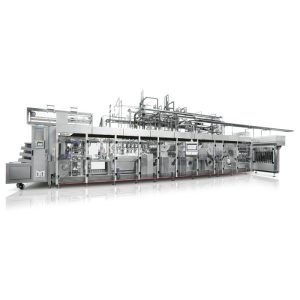
The new fully automated paneer line, designed and installed by Agathangelou, is built to handle 1,200kg per hour. That’s a significant volume, but what makes the system stand out isn’t just the capacity. It’s the intelligent way that every part of the process has been streamlined to support quality, efficiency and sustainability.
Foundations
Founded in Cyprus in the 1960s, Agathangelou has spent decades designing and delivering customised dairy production lines across Europe, the Middle East, Asia, Australia, and now North America. Specialising in soft and semi-hard cheese, yogurt, and milk processing technologies, the company is known for its ability to combine engineering with product-specific knowledge; especially in more complex or delicate dairy types such as halloumi, grilled cheese and paneer.
“Paneer is a beautiful product but it doesn’t forgive mistakes,” says Andreas Charalambous, technical manager and head of the project team. “Our goal was to create a system that respects the nature of paneer while solving the real problems processors face today; labour pressure, water use, cooling time, and consistency.”
Automation
In traditional setups, making paneer at this scale requires a team of 15 to 17 operators working in close coordination. At the new plant, that number has been reduced to just three to five operatives. Yet, nothing is lost and a lot is gained. The fully automated system maintains constant control over variables that human teams often struggle to keep consistent: pressing force, block formation, cutting patterns and cooling time. Automation doesn’t replace the human touch, it only refines it. It creates space for people to focus on oversight and final quality, rather than manual repetition. This has also meant better working conditions, lower physical strain, more predictable schedules and cleaner production areas. For many clients, these human-centred gains are as important as the technical ones.
What matters
One of the most striking outcomes of the upgrade is a 1.2 per cent improvement in yield. That might seem marginal, until you look at what it means in daily, weekly, or yearly production terms. That small percentage becomes hundreds of extra kilograms of finished product, created from the same input materials, with less labour and less water use. It’s the kind of gain that accumulates into long-term profitability. This was achieved not just through tighter controls on pressing and cutting, but also through a cleaner transition between steps in the line, ensuring minimal loss during transfer and shaping.
Freshly pressed paneer must be cooled rapidly. Not just for food safety, but to preserve its shape and structure. The line cools the paneer from 75-80°C to 20-25°C in just 1.5 hours. For comparison, many conventional systems need four hours to do the same. This faster, more controlled cooling doesn’t just save time. It helps the product retain its form, texture, and flavour profile more reliably. It also lowers energy usage and makes shift planning more efficient; a quiet but crucial edge in competitive production environments. The result is a paneer block that looks the same in every batch, holds its shape through distribution, and performs predictably in cooking.
Water use
Water usage is a growing concern across the dairy industry. Agathangelou has addressed this with an in-line water disinfection system that allows for recycling and reuse. By keeping water within a closed loop and applying rigorous disinfection protocols, the line dramatically reduces the amount of fresh water required and limits disposal volumes. It’s not just about compliance; it’s about responsibility. In regions where water is scarce or increasingly regulated, this kind of design makes business and environmental sense.
As dairy processing continues to diversify, products like paneer, halloumi, and grilled cheese are stepping onto a larger international stage. What they share is a demand for specificity. You can’t make good paneer on a machine built for cheddar; not without compromise.
Agathangelou’s work highlights a shift in how the industry thinks about “standard” lines. Instead of pushing general-purpose systems, more manufacturers are now seeking tailored solutions that honour the uniqueness of each product, whether it’s the size of the curd or the cooling profile post-press. While the mechanics are critical, so is the human experience.
“We believe that a good production line should make it easier for people to do good work,” says Panagiotis Christoforou, sales manager. “That means fewer risks, less waste, and a product that speaks for itself.”
At its core, it is about more than just equipment. Every detail, from temperature curve to water circulation, matters when the goal is excellence. Technical precision and human values don’t have to be at odds. It is a space where efficiency serves quality, and where tradition is not replaced, just upgraded.
Topics
automation food safety workforce
PeopleAndreas Charalambous Panagiotis Christoforou
OrganisationsRegions