A working day…

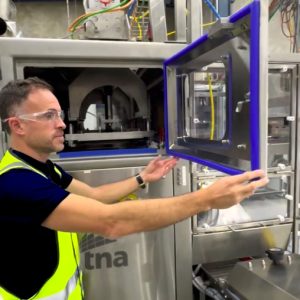
Joe Matthews of Sycamore Process Engineering. Credit: Sycamore Process Engineering
Q. What in your background prepared you for your current role?
I studied motorsport engineering at university, so at first glance it wouldn’t seem like a lot fits with my current role. However, the underpinning engineering fundamentals are all the same, whether it’s designing air flow through an engine inlet/exhaust or milk flowing through pipework in a pasteuriser.
Q. How has the process of installing dairy systems changed and what has Sycamore done to streamline this?
Anything related to OPEX (operational expenditure) for a system is of high priority to our customers, and so resource efficiency is therefore always a big challenge across the UK. Whether that’s human resources such as operators to run the system or engineers to maintain it, or whether that’s utilities and services such as water, steam or electricity. These want to be kept as low as possible to secure the best possible return on investment, and minimise the carbon footprint for any given system, but must be balanced with a need to ensure quality of the finished product is not compromised.
Staying on top of the latest technological advancements through various means (for example, trade shows, webinars and training) while also actively participating in the community of our industry through societies and organisations such as the SDT, EHEDG, BFBI and PPMA. These all allow Sycamore to interact with our customers, suppliers and competitors and understand how such OPEX challenges can be addressed immediately and into the future.
Q. What do you think is the key issue facing systems installers currently in the UK?
The landscape of competition has changed for Sycamore in the recent years. The inclusion of bids from companies outside of the “typical” UK pool, from places such as India and China has presented some new challenges. Commercially driven challenges in particular, where the drive for excellence in OPEX needs to be redressed with stiff competition from a CAPEX perspective. Maybe some similarities could be drawn with the UK automotive industry, where even with strong engineering capability and a reputation for quality, there is a new commercial pressure point due to the immediate appeal of a lower price. The challenge is not just to deliver high-performing, efficient solution, but to do so in a market where international cost competition could reshape expectations.
Q. Anything else you think is a top concern?
The skills gap in engineering has long been discussed, and I believe remains a concern for all engineering sectors. Recruitment challenges are as apparent as ever in the engineering field. The representation of women in engineering has also long been discussed as an issue as part of this – if engineering and STEM is only going to be a consideration for the male half of the population then it seems reasonable to imagine this would lead to a shortage in overall engineering skills in the marketplace. On discussion with some more recent graduates, it feels as though the representation in university lecture halls is increasing, but still well off the mark in terms of balance. It’s never going to be an overnight fix, so while it remains a top concern, there is some positive signs that uptake from women in STEM is increasing and hopefully it will continue to do so.
Q. What do you consider your greatest achievement/challenge?
I can’t pinpoint a single event or action that stands out here. My career journey started out with being employed as a CAD engineer and being the only person in the design “team” as it stood at the time. Twelve years later, Sycamore now employs 75+ people, and I hold the role of technical director leading a large team of multi-disciplinary engineers. There are numerous people that have contributed to that growth and development, but being part of it, as an overall achievement to date, is something I am very proud of.
Q. What does a typical day look like for you?
As an engineer at heart, I try to keep my hand in the design development of our solutions and will create process flow diagrams or piping and instrumentation diagrams and occasionally turn my hand to some 3D modelling tasks if needed, but the opportunity for that is less often as the team grows. The majority of my input will come through design review sessions with the team. My typical day then mostly revolves around people, ensuring the team is well supported to deliver our business objectives, as well as developments aligned with their own goals. It is a high priority for me.
Q. Outside of work, what are your hobbies/interests?
I’m a keen skier when I can get to the mountains to enjoy it. Besides that, a combination of gaming, cycling, and swimming, or most recently Padel. I also have young children, so the joy and chaos of that generally occupies most of my time outside of work.