Keeping an eye on four things

Credit: Lactalis
The future has never looked so full of possibility for dairy nutrition as it does today. Here are ways that can help you build that brighter future:
- Creatine plus protein
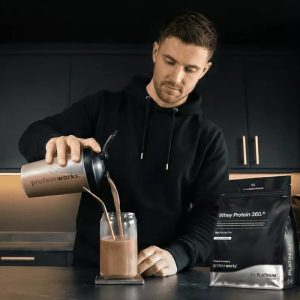
Ehrmann, one of Europe’s biggest dairy groups and owner of one of Europe’s most successful high protein brands, is rolling out a genuine innovation that should make every dairy in Europe sit up and think. Ehrmann has debuted a range of drinks, pots and nutrition bars that offer the benefits of creatine paired with protein. The range will appeal to the growing numbers of younger consumers who are fitness-focused and consume protein as part of their healthy lifestyle. They are aware of the benefits of creatine and probably have friends who use creatine powders. Interest in creatine is surging among Gen Z, for whom fitness and gym-going is an everyday activity. Google searches for creatine outpace those for collagen. Creatine has increasingly been used as a supplement by fitness consumers since the late 1990s. Usage began with professionals and Olympic athletes and from there gradually widened to its current position, as something used by “normal” consumers who do fitness.
Creatine pairs very well with protein and it has a “feel the benefit effect.” This is something which has for 25 years been shown to be the most effective way to secure repeat purchase.
- GLP-1
Contrary to what you will hear consultants claiming at conferences, consumer interest in using GLP-1 drugs for weight loss is a bigger opportunity for the food industry than it is a threat. The benefits that GLP-1 drug users are looking for, such as protein, digestive wellness, less sugar, fewer calories and smaller portion sizes, are the same ones that our industry has been focused on for over a decade. Recent launches in the US from Danone and Lactalis show that there are some clear paths you can follow if you want to be “GLP-1 friendly,” grow sales and keep your risk low. In both cases they followed almost exactly the same strategy, launching an extension of an existing high-protein brand with a strong position in fitness and nutrition. The Lactalis launch, for example, called Pro-Fiber, is an extension of the Ratio yogurt line. It is high protein (delivering 15g per 150g serve) and low in sugar. There’s 10g of prebiotic fibre added; 3g of total sugars with no sugar added; four vitamins and minerals have boosted level and there’s just 180 calories per 150g.
There’s no reference to GLP-1 on-pack. The discussion about its suitability for GLP-1 users is kept to the product website, where it is described as “GLP-1 friendly.” That’s what wise brands do. If you are too overt about GLP-1 that might turn off the 85% of people not using GLP-1s. And if the GLP-1 drug frenzy fizzles, you aren’t trapped with what may be a negative sign.
There are many brands that can meet GLP-1 consumer needs by fine-tuning their offering with little difficulty and, as Danone and Lactalis are showing, there is a clear, low-risk opportunity.
- Protein quality
Danone, Nestlé and Meiji are all moving into this communication which, if done right, will sustain protein interest among consumers for the next five years.
Dairy protein is scientifically measurable as the highest quality protein, meaning it’s more bioavailable and that it gives you the best results with the lowest quantity. Only soy protein comes close.
Awareness of this advantage is currently confined to only the most fitness-oriented consumers, just as awareness of protein was 25 years ago. In Asia some leading food and beverage brands are beginning to talk about quality, targeting the health-active consumer. Japanese dairy giant Meiji is using the message for its high-protein single-serve protein drinks. In Vietnam Nestlé is using the quality message on its Milo dairy drink brand, one of the most significant brands in Asia with $3 billion annual sales. And in Japan Danone is adding the quality message to Oikos.
It’s a message that will resonate with consumers who are into sports and fitness, who are increasingly aware that protein quality matters. It will be new to the mainstream consumer. But first steps such as these – targeting the health active before the mainstream – are how new ideas are created.
If you want to create new competitive advantage and move consumers on from thinking only about the protein number on the front of the pack, and genuinely help people to make healthier choices, talking about protein quality is the next step.
- Low lactose
In 2025 the fast-growing, $3.2 billion lactose-free milk category in the US overtook plant milks, as we forecast it would back in 2020. Despite selling at a premium of 30% to oat milk and a 100% premium to the leading almond milk brand, consumers are turning to lactose-free dairy for a product that tastes good, is natural, more “real” and has a shorter ingredient list and better nutrition than plant milks. Lactose-free dairy appeals to consumers’ growing interest in dairy protein as well as its digestive benefits.
Much of the credit can go to the Fairlife brand, which has become a $1.2 billion annual sales brand. It’s an ultra-filtered milk with three big advantages:
a higher protein content than regular milk (13g per 240ml compared with 8g for ordinary milk), half the sugars of regular milk (6g versus 12g) and no lactose.
The Natrel lactose-free brand is similar success in Canada. What the successes have in common is that they are ultra-filtered, meaning they deliver on three of consumers’ biggest desires – more protein, less sugar and digestive wellness. It also tastes good.
The use of UF milk as an ingredient is going wider. Lactalis new yogurt for GLP-1 users (see above) is one of a growing number of spoonable and drinks based on UF.