DMK sees decline in “challenging” market
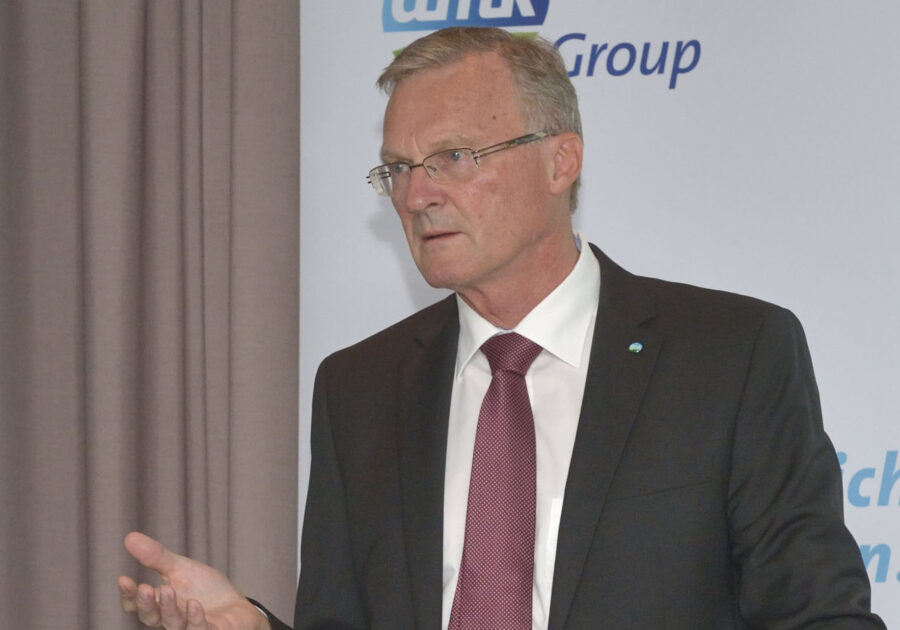
It was a look back on very challenging months for the dairy industry at Deutsches Milchkontor’s (DMK) annual general meeting. DMK is Germany’s largest dairy group. Due to the low market prices for milk and milk products, DMK saw a decline in sales to €4.6 billion in 2015 (2014: € 5.3 billion). Last year the firm began a cost-cutting program to trim up to €60 million off costs by the end of 2016.
“The crisis-ridden 2015 has shown that the long-term strategy of DMK Group is right, even if at the time any possible penny must go to the farms,” says CEO Josef Schwaiger.
With the 2015 volume of 6.7 billion kilograms of processed raw milk (previous year: 6.8 billion kg), DMK was able to pay its approximately 8,300 co-operative milk producers a milk price of an average of 27.57 cents/kg (the year before 36.86 cents/kg).
Priorities of the strategy are to consistently strengthen the brand business, development and introduction of innovation, as well as internationalization.
With attractive products and marketing concepts that are geared to the needs of customers, the Milram brand could make a positive contribution to earnings despite the adverse market conditions. In the international market, the export brand Oldenburger developed well and was even able to increase the sales in the reporting year.
Also in ingredients, DMK was able to generate the long-term strategy of broad diversification and the development of its product range. Research and development is an important pillar.
On 1 April the merger between DMK and the second-largest cheese producer in the Netherlands DOC Kaas was implemented, which gives further access to international markets. DOC Kaas employed in 2015 around 230 people and processed one billion kilograms of raw milk from its approximately 1,050 milk producers to cheese.
The completion of major investments benefits the result of DMK. Synergies from these projects will have a positive effect in 2016. New plants in Zeven, Georgsmarienhütte and Erfurt have contributed to improve competitiveness.
Given the saturated domestic market, a significant contribution from new markets will bring protection for the future revenue of DMK. The export share is currently around 40% of the total revenue and it is believed this will continue to grow.