
Dairy fat is back
European dairy must tell consumers the good news about full-fat dairy, says Julian Mellentin.
Some day in the not-too-distant future – perhaps five years from now, perhaps longer – everyone in our industry will understand that selling low-fat milk, and even low-fat yogurt, was one of the greatest disasters ever to befall our industry.
By taking away the satisfying mouthfeel of dairy fat – which is only 4% of whole milk – we took away pleasure from the consumers’ experience of the product and shifted it from being a natural whole-food to something de-natured.
Unsurprisingly, consumers began to look increasingly to other beverages to provide refreshment and pleasure. This development contributed to the now irreversible decline of the milk-drinking habit; it helped propel the rise in sales of fruit juices and smoothies and a host of other drinks and has arrived at its latest crisis – the increasing preference of a small but fast-growing number of consumers in all countries for “non-dairy” milks, such as almond and coconut.
And if you think that this trend against dairy won’t affect you, think again – in America “non-dairy” milks have already seized a 10% market share. Some European countries are not far behind.
The irony is that many of these “milks” have a very poor nutritional profile and have to be heavily fortified to reach the same level of nutrients naturally present in cows’ milk.
Demonizing dairy
The impulse for “the great low-fat disaster” came, for 30 years, from health professionals and academic researchers operating on a hypothesis – not established science you should note, just a hypothesis – that dairy should be demonized on the grounds of alleged harm from its saturated fat content.
The message that people should limit consumption of dairy foods and only consume low-fat dairy had its foundations in inadequate science. A rising tide of significant studies is showing how baseless this advice was. Researchers are rolling back the negatives about dairy fat. The long-held view that dairy fat is connected to risk of cardiovascular disease has now been firmly debunked by a steady stream of good quality science. An ever-increasing body of science that suggests that dairy foods have a neutral or even beneficial effect on the risk of heart disease and diabetes. Low-fat milk may, in fact, have no health benefits whatsoever.
Far from improving health, the anti-dairy fat advice could have contributed to some of the growing health problems of the last two decades. Some consumers are already turning away from low-fat dairy.
As so often with trends, it has begun in the US:
• America’s liquid milk market has long been in decline and there’s no sign of that decline ending. In 2014, according to IRI, the $10.5 billion (€9.2bn) low-fat milk category experienced a 5.2% decline in volume. But in parallel with that, the unthinkable happened – sales of whole, full-fat milk rose 1.3% by volume, and 7.3% by value, to a total of $4.8 billon (€4.2bn).
• The revival of full-fat milk appears to be gaining speed in 2015, with IRI reporting supermarket sales up by 5% in value and 2.3% by volume in the 52 weeks to May 2015. In the same period low-fat milk sales fell another 3%.
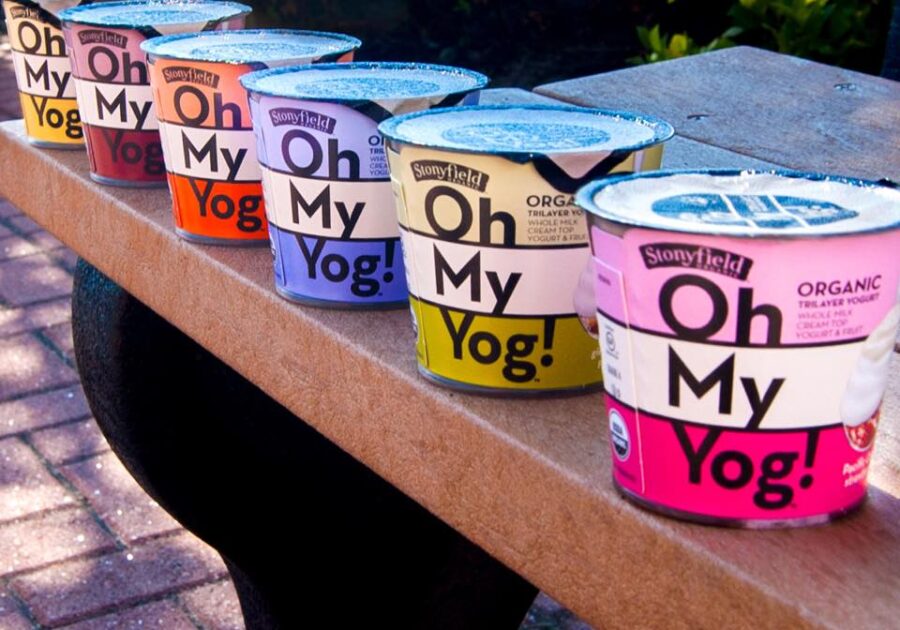
• Americans are embracing full fat yogurts – or “yogurt made with whole milk” as it’s usually described on labels. Companies are responding with more new product launches, such as Oh My Yog! from Danone-owned Stonyfield. The company said its full-fat yogurt is “just getting back to what yogurt truly is.”
• The Noosa brand of yogurt, which was a start-up in 2010, has in 2015 produced $100 million (€87.8m) in retail sales – selling only full-fat yogurt. Noosa’s CEO told New Nutrition Business in an interview that the company has no intention at this point of coming up with a low-fat variety – the creamy, fat-based texture is too important, adding: “The cool thing now is that dairy fat no longer is considered bad for you.”
A call to arms
In Europe, older consumers who grew up in the “fat is bad” era cannot be expected to change their habits, but younger consumers will. The change, however, will take time, because across Europe there are health professionals and government bodies who are clinging like shipwrecked sailors to the sinking ship that is the advice to consume low-fat dairy. Many people in those worlds are driven by rigid dogma and are unable to accept that when the scientific facts change, our opinions can change.
That means that it’s up to European dairy companies to do two things:
1. Start educating consumers and dietitians about the intrinsic health benefits of full fat dairy and overturn the low-fat myths.
2. Aim for unashamed indulgence, launch full-fat products and market them for pleasure and taste.
These steps will require some courage on the part of industry leaders, since there are some countries where the “low fat extremists” hold sway in academia and government and they will fight the new reality with every means at their disposal.
But the essence of leadership – in a company or an industry or in any part of life – is that you must lead and that means being the one who does difficult things and takes the risk of being out in front.
European dairy industry leaders now have a chance to show whether they are truly leaders of their companies and or just risk-averse technocrats who prefer to focus on adding ever-more stainless steel processing and pump out ever more volume while allowing their industry to have its communications strategy dictated by third parties.
Every so often in life and in business there is a “moment of truth” when people are tested by events and opportunities. For senior executives in Europe’s dairy industry, the moment of truth is here, right now.