Cardio 101
What are the fat facts about saturated fats? A Dairy Council conference in three British cities investigated. Suzanne Christiansen reports.
The world of human nutrition is undergoing a seismic change, and the idea that saturated fats are ruinous to human health has now been disproved, after decades of erroneous nutritional advice. “The Saturated Fat, Dairy and Cardiovascular Disease” conference, held by the Dairy Council and DairyCo in three cities in the UK – Cardiff, Glasgow and London wound up not offering definitive answers, but showed that dairy is no longer a dietary demon.
Dr Anne Mullen, director of nutrition for The Dairy Council, opened proceedings by noting, “Milk and milk products are very integral to the UK diet for all age groups. They provide significant quantities of energy – very nutritious. Saturated fats are why we’re here today.” She says that there is a lot of “diversity in the saturated fats family. Not all saturated fatty acids are created equal.”
But there is a lot of confusion out with the public, she notes. “Scientific studies have been misinterpreted by the media,” Mullen says. Hence the conference, “which looked at the role of saturated fats in cardio metabolic disease, the association between, milk, dairy foods and cardio metabolic disease, and untangling the matrix and getting perspective for public health about nutrients and foods.” It was a tall order.
Dr Ailsa Welch, the chair for Norwich Medical School at the University of East Anglia in the UK, set the scene – coronary heart disease (CHD) is the UK’s single biggest killer, with one in six men and one in 10 women set to die from CHD. That being said, there have been dramatic changes in CHD mortality over the last 40 years, with the rates declining. Unfortunately the UK still has one of the higher rats of mortality from CHD in the European Union.
Meanwhile, the rate of type 2 diabetes is increasing, which is a risk factor for CHD. It is estimated that the NHS spends £14 billion a year treating avoidable diabetes complications, and more than 2.7 million people in England will suffer from it. Lack of physical activity is a contributor. There was some good news. as the intake of fruits and vegetables is also increasing, with an average of 4.1 of the recommended five per day now being eaten.
Dr Scott Harding, a lecturer in nutrition science at King’s College in London, UK, asked what the fat facts were. “Fat is generally associated as a negative nutrient and is not considered healthy to store,” he states. “But as we know, fat gives things flavour, and fats can help metabolise certain essential vitamins in our body.”
Lifestyle and diets is the main driver behind the decline in cardiovascular disease (CVD) rates in the UK, but it remains a substantial killer, with one in three dying from CVD. As saturated fatty acids are complex, it makes it complex to translate to the general public.
Studies over the years have shown there is no direct link between cholesterol eaten in the diet and cholesterol levels in the bloodstream. However, past recommendations restricted high cholesterol foods such as eggs from the American diet. “We have to look more holistically at the dietary patterns,” he notes.
Professor Philippe Legrand of the L’Institut National de la Recherché Agronomique, asked whether saturated fatty acids were friends or foes. “Saturated fats are nutrients, not poisons,” he states. “The only good questions is, which dose is optimal for human health?”
What people don’t realise is that we not only eat saturated fats, but the body also produces them, Legrand says. “We need saturated fats for things such as membrane structures and anti-viral roles. Some saturated fatty acids can even lower cholesterol.” The problem is that these saturated fats have been linked to CVD, but the link is one of amount, not by structure. “There is no reason to consider saturated fatty acids en bloc any more,” he states. “The up-to-date recommendation is to split up the fatty acids group.”
However, consumers should eat less processed meat and avoid too much processed food and palm oil, Legrand notes. “You have to consider the origins of the saturated fatty acids.”
Dr Marianne Geleijnse, of Wageningen University in the Netherlands, spoke about meta-analyses of dairy consumption and cardiovascular disease. She notes that many minerals can affect blood pressure, and that CVD covers many kinds of heart-related diseases. “As much as 90 per cent of CVD can be prevented by diet and exercise, so it’s important to focus on diet and lifestyle.” Different measurements are related to different health issues – for example, LDL cholesterol levels are more related to myocardial infarctions than stroke, while blood pressure is linked to stroke risk.
Meta-analysis of studies showed the following: there is a seven per cent lower risk of getting a heart attack with 200 millilitres of milk consumed per day. There was also a lower risk of stroke in people who drink milk. Meanwhile, dairy fat consumption was not typically associated with an increased risk of weight gain, according to another study. The difference between low and higher fat intake in dairy showed no difference in bioavailability of calcium.
Catching the wave
Professor Ian Givens from the University of Reading looked at the interaction between dairy and cardio metabolic health. He notes that the cases of non-alcoholic fatty liver disease have risen sharply, as obesity in the population expands. He also notes that the Caerphilly study, which is a long-standing study of a male Welsh population set, has shown that blood pressure lowers with the consumption of more dairy in that cohort.
Givens states that the calcium in dairy is doing something to reduce fatty acids in the gut, by increasing saponification in the faeces. He also observes that there is a matrix effect where the saturated fatty acids in dairy products are being prevented from absorption by the body. The MESA, or The Multi-Ethnic Study of Atherosclerosis (MESA), has also shown that meat fat increases the risk of CVD, while dairy reduces the risk. These studies have also seen a more than 10mm mercury decrease in people with the highest dairy intakes.
Givens also explained arterial stiffness, which is an independent predictor of cardiovascular events. This is where the aorta gets stiffer in particular as people age, suffer renal disease, diabetes or hypertension, or smoke. There is a pulse wave velocity that is a measurement of the speed of the pulse that occurs after contraction, which is lower with more dairy products eaten. “The more dairy, the better the pulse wave velocity,” he says. Another item of interest was the impact of whey and casein on blood pressure and vascular stiffness. Casein did not have an effect, but whey did make a positive difference in vascular stiffness.
Looking at dairy products and type 2 diabetes mellitus (T2DM), low fat milk showed a reduction in this type, while whole milk did not. Study is now continuing on the effects of fermented milk products on T2DM.
Cheese please
Change has come about over the years in beverage purchases, Givens notes. UK dairy beverage purchases have decreased from 1975 to 2007, and sugar-rich beverages have replaced dairy. These sucrose-sweetened beverages increase fat storage in the liver. Meanwhile, milk decreases fat storage in the liver.
Overall, there has been little change in the actual weight of people, but a big change in where the fat is stored on a person. An interesting side effect was shown to be that cheese consumption may moderate the effect of the soft drinks intake.
In conclusion, Givens says that milk is not associated with increased CVD or mortality, and is linked to lower blood pressure. “You have to look at the overall benefit to cardiovascular health, and judgements should be at the diet and total food level, versus just looking at nutrients,” he says. In response to a question about recommending one type of dairy over another, he replied, “I don’t think we can say but we should consume more cheese. Overall there is not really evidence that dairy products are a risk for CVD. The tendency is towards the other direction in its effect on blood pressure. For fermented products, we need more information.”
Nutritional powerhouse
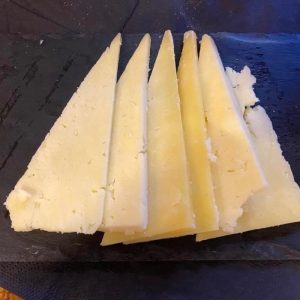
Professor Arne Astrup from the University of Copenhagen was the final speaker, even though he was not present, having been previously recorded live in Cardiff. He notes that the saturated fatty acids in cheese are actually beneficial, while yogurt and whole milk seem to produce more weight loss. Cheese is a nutritional powerhouse, with a protein content five times that of milk, while yogurt offers six times more calcium than regular drinking milk. “It makes sense, as they are concentrated forms of milk,” Astrup points out.
A study where 800 obese families had a “supermarket” set up for them to select products for new diets showed that protein gives people more satiety, and thus they tend to eat less. “Dairy is a very valuable tool for increasing protein, and this has an effect on feelings of satiety.” He surmised it was the hormones that were responsible for this effect. Overall, dairy was promoting fat loss, and cheese was coming up with beneficial effects. “There is something special about cheese,” Astrup says. “Increased cheese consumption reduces triglycerides and increases fat secretion.” However, he warns against relying on it for weight loss – “Not for weight loss, but maybe for weight maintenance.” If a person eats saturated fat, more faecal fat is excreted. Overall, cheese has been wronged, he believes. “Cheese and dairy are important nutrient-dense foods that can contribute to weight control and improvement in cardio metabolic risk.”
Legrand notes that the real risk for consumers is the excess of new behaviour in eating: “We are taught that things are black and white, good or bad, but actually things are complicated. There is no bad food or bad nutrient, there are just bad consumers.” Geleijnse adds the problem becomes one of choice: “If there are so many forbidden foods, I’ll just eat what I want.” Mullen sums up by saying, “What we’ve seen is a demonstration of the total food versus just nutrients. We have some really good news items. Saturated fatty acids are not one entity, and we need to differentiate.”