The trends reshaping the Nordic nations
Credit: Arnstein Bjone
Innovation, savvy marketing and shifting consumer habits are all helping to reshape the Nordic region’s dairy industry, with traditional staples and innovative new products finding favour with both local and international consumers.
In 2025, the Nordic dairy sector generated US$19 billion (€16.3bn) in revenue, with projections the market will reach US$25 billion (€21.5bn) by 2030, according to German data platform Statista.
Industry analysis from global market research and consulting firm Deep Market Insights indicates that while Nordic milk and liquid dairy products dominated in 2024 in terms of regional market size contribution, from 2026 to 2033, yogurt and cultured products are forecast to deliver the fastest growth.
As well as traditional marketing by established Nordic dairy companies such as Danish-Swedish company Arla Foods and Norway’s Tine SA, the popularity of Scandinavian dairy products is also benefitting from the attention of food and travel journalists and social media content creators as well as international food awards and scientific research into the region’s dairy product properties.
Norway
In Norway, data from EU statistical agency Eurostat indicates the country exported around €146.9 million worth of dairy products in 2025, up around 24% from €118.6 million in 2024.
These figures do not consider exports or sales from major Norwegian dairy brands’ production facilities based in other territories, such as the US and Ireland (for example Norwegian dairy giant Tine SA’s cheese production facilities in Ohio and Cork.
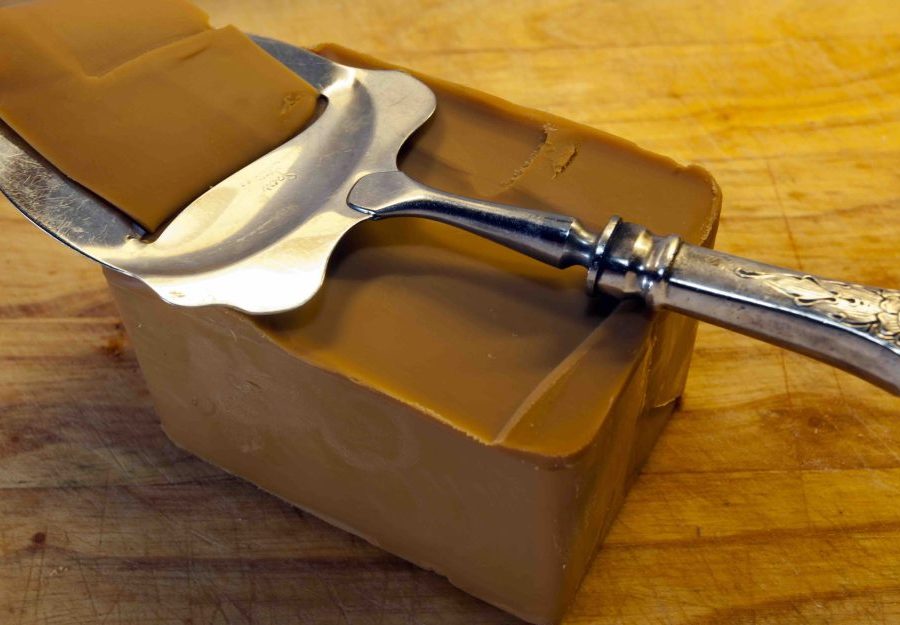
Brunost, meaning ‘brown cheese’ in Norwegian, a product officially invented in the nineteenth century but with origins dating back thousands of years, has become an international food sensation, with both online influencers and mainstream international media extolling its unique taste and versatility. US publications including Forbes and the Los Angeles Times have dedicated articles to brunost, while food and lifestyle bloggers have brought the cheese to a wider audience.
“Brunost is technically not even cheese in the way Americans think of cheese. It’s made from whey that’s boiled down until the milk sugars caramelise, it’s sweet and slightly salty, almost fudge-like in its consistency,” explains Norway-based US social media content creator Meg DuPer, talking to Dairy Industries International (DII).
She says the key to enjoying brunost is not to think of it as “cheese” in the savoury sense, but to appreciate its qualities. “I realised it’s not meant to replace cheddar. It’s meant to be in its own category entirely,” DuPer says.
She also notes that due to Norway’s enhanced dairy standards, its dairy products are high quality, which adds to their appeal. “They take dairy standards very seriously here. Hormones used in dairy production like [the synthetic growth hormone recombinant bovine somatotropin] rBST, which is allowed in the US, is banned in Norway,” she says. This reflects Norway’s membership of the European Economic Area (EEA) and adherence to EU food regulations that also apply to dairy producers in other Scandinavian countries and Nordic neighbour Finland.
Tine, Norway’s largest dairy cooperative with more than 7,000 owners, exports around 800 metric tonnes annually of its own brand of brunost. The company also produces the internationally-known and branded Jarlsberg cheese. The Jarlsberg trademark was first registered by Tine in 1972 and is manufactured exclusively by the company and its international subsidiaries, its communications team confirmed.
Tine also makes Norvegia, another trademarked cheese brand and a firm, rindless slightly sour brand of cheese. This is part of an evolving range of milks, butters, yogurts and other dairy products, with consumer preferences driving new product launches, according to the company.
In February 2026, Tine launched its own brand of Smøremyk, literally ‘soft butter’, a spreadable product that contains 75 per cent butter combined with rapeseed oil for a softer consistency that can be spread when chilled. It also launched Lettost, or ‘light cheese’, a mixture of light Norvegia and Norwegian mozzarella. “[Lettost] has 16 per cent fat, is naturally high in protein and is good for melting, while of course being real cheese,” explains Ida Bjørnstad Vrangen, communications adviser at Tine.
She adds the company is trying out new lower sugar products for children. “More people are choosing natural over fruit yogurt,” she says, noting the company has launched a Tine ‘Junior Yoghurt Naturell,’ which is a natural yogurt in a squeeze bag for children. She adds, “We have been open about the fact that this is a product we are unsure we will succeed with, because it may be more demanding to get children used to the taste of plain yogurt alone.”
According to Tine’s 2024 annual report, Jarlsberg continues to be its leading international brand, with 15,000 tonnes exported in 2024, and Tine’s Irish and US production facilities the key source of overseas sales. The company said lower milk prices in Ireland compared to Norway help bolster its margins for this key export product.
Aside from the appreciation of Norwegian dairy staples, the country has also been developing a global reputation for new artisan products, including blue cheese.
In 2023, a Norwegian pasteurised semi-solid cow’s milk blue cheese called Nidelven Blå made by Gangstad Gårdsysteri dairy in Nessetvegen, near Trondheim, was named the best cheese in the world at the 2023 World Cheese Awards, beating cheeses from more than 40 other countries.
According to Maren Gangstad, Gangstad Gårdsysteri’s general manager, Nidelven Blå is distributed internationally by Bath, UK-based The Fine Cheese Co. to retailers in England and Spain. However, such is domestic demand for the small batch artisan cheese, little is sent abroad. “In total, we sold 15,306kg of Nidelven Blå in 2025, and about 600kg of that was exported, so less than four per cent,” Gangstad told DII.
Denmark
Denmark is one of Scandinavia’s leading dairy producers, due in part to the global strength of Arla Foods, the world’s sixth largest dairy company, which along with 23 smaller producers makes up the domestic dairy industry, producing around 5.69 billion kg annually from 23 domestic dairy companies said the Danish Dairy Board.
According to the Danish Agriculture and Food Council (DAFC) and Danish Dairy Board, the country’s exports of dairy products were worth Danish Krone DKK28 billion (€3.7 billion) in 2024, the most recent year for which its statistics are available. This is up from DKK16.8 billion (€2.25 billion) a decade earlier.
The DAFC said dairy products account for 18.6 per cent of Denmark’s total food exports, with cheese making up more than half of the dairy export value at DKK15.7 billion (€2.2 billion) in 2024, followed by preserved milk products, butter and liquid milk products.
An Arla Foods spokesperson told DII that while Arla remains very connected to its Scandinavian roots, the company’s outlook is now fully international. “[We have] farmer owners across seven different European countries and sell our products across the world,” the spokesperson says.
Nevertheless, Arla continues to invest in Denmark, and in mid-2025 announced plans to expand annual cream cheese production at its Hostelbro Dairy by 16,000 tonnes, having already expanded capacity at the site by 27,000 tonnes earlier in the year.
The company also said in 2025 that it would invest Swedish Krona SEK70 million (€6.4 million) in its Falkenberg dairy, Europe’s largest cottage cheese production facility, to increase output of its Keso cottage cheese brand by 1,500 tonnes per year. This is on top of a 17 per cent increase in volumes to 27,000 tonnes of cottage cheese last year, which Arla says was driven by “popularity, fuelled by social media buzz around wraps and pizzas.”
Internationally well-known Danish dairy brands include Arla-owned Lurpak butter and Castello Danish Blue cheese, the latter of which is produced in Høgelund dairy in Jutland, Denmark, and falls into the Danablu category of traditional Danish cheese with EU Protected Geographical Indication status.
Marie Gang Larsen, a spokesperson for the Danish Dairy Board, told DII that new dairy product launches and sales in Denmark are mostly being shaped by health preferences. “High protein products are a priority for many Danish consumers. How dairy products play part of a healthy diet for children, elderly and sick people, is a focus that also reflects production innovation,” she says.
Larsen says products that have benefitted from consumer interest in protein in the last few years include skyr, a high-protein, fat-free cultured dairy product with Icelandic roots, and cottage cheese, while kefir, a fermented milk drink, is also on an upward trend. Denmark has a worldwide export market for its dairy produce, with its biggest markets by value in Germany, the UK, Sweden, the Netherlands and China.
Larsen notes Denmark’s thriving dairy industry, could be facing a milk production crunch, however, which could impact its future growth. “Raw milk production is a prerequisite for dairy production and younger farmers must enter the industry to take over from current farmers on existing farms. Political issues could potentially put this development at risk, for example if land is required for other purposes than farming,” she says.
She also says organic dairy production is an important focus for the Danish dairy industry. According to the DAFC, one in three litres of milk bought by Danish consumers is organic and every other litre of milk consumed by pupils in Danish schools carries the country’s red organic label.
The council believes organic farming could be developed as a unique Danish strength and marketing advantage to help the country unlock new markets for dairy and other produce.
Sweden
Eurostat data shows Swedish dairy product exports were valued at around €1.75 billion in 2025, up 23 per cent from €1.4 billion the year before, with key export markets in Germany, Denmark and Finland. Along with Denmark, Sweden is the co-home of global dairy company Arla Foods and the country remains an important investment destination for Arla’s production.
In mid-2025, Arla announced it would launch a new production line for skyr at its Linköping Dairy, opening in 2028, as part of efforts to broaden its Nordic portfolio. In February 2026, Arla announced a €300 million investment in a new cheese dairy in Götene, Sweden, marking the biggest capital commitment in the cooperative’s history in the country.
The facility, scheduled to begin operations in 2030, will double milk intake at the Götene site to around one billion kg per year and increase Sweden’s cheese self-sufficiency rate to 47 per cent, according to the company.
It also marks a broader restructuring of Arla’s Nordic manufacturing footprint, with Household cheese, or Hushållsost, an Arla brand of hard cheese popular in Sweden, production set to be transferred to Götene from Arla’s Nr. Vium dairy in Denmark, allowing the Danish site to focus on high-demand, export-oriented products.
The company is betting on the growing global popularity of skyr, noting in its 2025 annual report that its own brand Arla Skyr “recorded solid, volume-driven revenue growth of 17.8 per cent, making it one of the strongest Arla sub-brands of 2025”. Arla adds it is leveraging machine learning and data at its skyr production facilities to anticipate consumer preferences and speed up decision-making and innovation in this key product line.
Arla’s confidence in skyr’s potential is backed by independent research. According to India-based Meticulous Research, the global skyr market has witnessed robust growth in recent years, reflecting the growing popularity of protein-rich and low-fat dairy alternatives among health-conscious consumers.
Meticulous Research said the skyr market was valued at US$1.5 billion (€1.3bn) in 2024, projected to reach US$4.5 billion (€3.8bn) by 2035, at a compound annual growth rate (CAGR) of 10.3 per cent. This growth is expected to be driven both by health preferences and the growing availability of skyr products in new markets across North America, Europe and the Asia-Pacific region.
Sweden’s dairy sector is also focused on domestic demand. At the annual general meeting of the Swedish Dairy Association (Svensk Mjölk) in April (2026), the industry’s dairy CEOs noted that Swedish milk production increased 3.6 per cent in 2025 and interest in Swedish dairy products is strong, with several product categories are growing rapidly.
These include high protein products such as quark and cheese, while research from Swedish market research firm Novus indicates prominent levels of public confidence in Swedish dairy products and that seven out of 10 Swedes drink milk every week.
Finland
In neighbouring Finland, Natural Resources Institute Finland (Luke) says there was a decline of seven per cent in the number of dairy farms, although milk production has been stable – at two billion litres of milk last year (2025), down slightly on 2024. Riikka Peltomäki, a spokesperson for retailer Lidl Suomi says of the Finnish dairy market, “Finns are ‘milk people’ and although milk consumption has decreased slightly by two per cent in 2024, it is widely consumed as a beverage, with low-fat lines most popular.”
That said, Greek and Turkish yogurt have long been gaining popularity, Peltomäki says. “Currently high-protein alternative quarks (curd cheese) are of interest and various flavours are popular. Finns are particularly fond of mild creamy cheese,” she told DII. “However, plant-based alternatives are gaining such as oat-based liquids, soy yogurt and spreads,” she added.
Finland-based cooperative Valio dominates the country’s dairy products market, commanding 80 per cent of the milk production as its owners are 3,200 dairy farmers. Valio remains a major cheese producer, with Finns eating 26.1kg per person annually from a total production of 87 million kg in 2025 (up five per cent year-on-year), says Jansik Csaba, senior researcher at Luke.
Popular lines include cream cheese Valio Oltermanni, Aura Blue and mild cheese Turunmaa, along with milk curd-based Leipäjuusto. Lidl’s own Milbona cream cheese is popular in Finland, says the retailer.
The country has increased its dairy exports with in 2025 Valio’s exports from Finland earning the company €580.8 million. Valio CEO Annika Hurme said in Valio’s latest 2025 annual report (24) that exports have “compensated for sluggish domestic consumer demand,” with milk powder and industrial butter sales benefitting from high global prices, with sales to the European Union and Asia replacing a healthy past trade with Russia following that country’s ongoing invasion of Ukraine.
Iceland
Eurostat data indicates that Iceland, a small market of 400,000 people, exported around €53.8 million’s worth of dairy products in 2025, up 17 per cent from €45.8 million in 2024.
As with other Nordic dairy producers, much of the international demand for Icelandic products is supplied by overseas production facilities. For example, Ísey Export, a company affiliated to Iceland’s largest dairy cooperative MS Iceland Dairies (Mjólkursamsalan), has factories making Ísey brand skyr in Denmark, Norway, Russia, US, Japan, UK and New Zealand as well as Iceland.
The Nordic country’s domestic dairy industry is dominated by MS Iceland Dairies, a cooperative organisation that includes over 600 of Iceland’s family-run dairy farms and other milk producers across the country representing 90 per cent of Icelandic dairy production.
Iceland’s key high profile dairy product on the international market is skyr. While technically classified as a soft cheese due to its production process, skyr is more commonly marketed and consumed more like yogurt, with many sweetened and flavoured as well as plain varieties.
Other domestically popular Icelandic dairy products include cheeses such as Höfðingi, a soft creamy mild cheese with a white rind as in brie, and Tindur, a hard, aromatic aged cheese with a soft flavour.
While Iceland’s cheeses and other dairy products with the exception of skyr have yet to make a significant dent in international markets, the growth of tourism to Iceland including by food and travel writers for titles such as Vogue and National Geographic is starting to bring its dairy produce to a wider foreign audience.
Like other Nordic countries, Iceland’s dairy industry is keen to promote the health benefits of its products, and to back its claims up with scientific research.
According to a study published in April 2026 by the University of Iceland, Icelandic milk contains a higher percentage of A2 beta-casein proteins than milk from some other sources, making it “healthier” and less prone to prompt reactions in dairy intolerant consumers.
“Research suggests that milk from traditional Nordic cow breeds, including Icelandic ones, contains a higher percentage of A2 beta-casein proteins than is generally the case, and consumption of milk rich in these A2 beta-casein proteins is believed to be associated with various positive [digestive] health effects,” María Guðjónsdóttir, professor at the Faculty of Food and Nutrition Sciences at the University of Iceland, said on the publication of the research. As a result, she recommended more research into Icelandic milk’s composition.
Topics
bloggers bloggree business cheese country profiles milk Nordic skyr
PeopleAnnika Hurme Jansik Csaba Maren Gangstad María Guðjónsdóttir Marie Gang Larsen Meg DuPer Riikka Peltomäki
OrganisationsArla Danish Dairy Board Eurostat Forbes Gangstad Gårdsysteri Lidl Suomi Los Angeles Times MS Iceland Dairies (Mjólkursamsalan) Natural Resources Institute Finland (Luke) Novus Swedish Dairy Association (Svensk Mjölk) Tine University of Iceland Valio
Regionsdenmark European Economic Area (EEA) Finland iceland Nordic Norway Scandinavia sweden